· 5 min read
Mulethi (liquorice) with blood pressure medicines: what to know
इस लेख को हिन्दी में पढ़ें: मुलेठी और BP की दवा: ग्लिसराइज़िन, पोटैशियम और किसे बचना चाहिए
In short
Ask your doctor before drinking mulethi regularly, and expect that many will say to avoid it. Its glycyrrhizin, taken regularly in large amounts, makes the kidneys hold on to sodium and water and let potassium go, which over weeks can raise blood pressure. That works against BP tablets, so tell your doctor about every liquorice habit you have.
Mulethi is the sweet root in every pansari shop and in half the kadha recipes on the internet. It is also the one kitchen herb with a well-documented effect on blood pressure, which puts it in a different category from the rest. If you take tablets for blood pressure, or for the heart, this is the herb to read about before the cup, not after.
01 Glycyrrhizin, the sweetness with a side effect
The compound that makes liquorice sweet is glycyrrhizin, and what is best understood about it is its side effect. Taken regularly in large amounts, it changes how the body handles salt and potassium: the kidneys hold on to sodium and water and let potassium go. The result, over weeks, is a rise in blood pressure and a fall in potassium in the blood.
This is not a laboratory curiosity. The US National Center for Complementary and Integrative Health lists it as the main safety concern with liquorice root, and the pattern, headaches, swelling, tiredness, raised pressure and occasionally an irregular heartbeat, is described in the medical literature in people who ate or drank a lot of liquorice for a long time.
02 Why this matters if you take blood pressure tablets
A medicine for blood pressure is working against something, and mulethi in regular amounts pushes the other way. The practical risk is quiet: readings creep up, the doctor sees them and raises the dose or adds a tablet, and the cause goes unnoticed because nobody thinks of a tea as a cause.
That is why your doctor needs to know. Keep taking the tablets exactly as prescribed, take your home readings as usual, and tell the doctor about any regular liquorice habit, including sweets, chewing sticks, churnas and herbal blends, so that they can read your numbers correctly.
03 Potassium, diuretics and digoxin
The potassium side of the story is where the documented interactions sit. Many water tablets, the diuretics such as furosemide, hydrochlorothiazide and chlorthalidone that are so commonly prescribed in India, lower potassium themselves. Mulethi on top of them can push it lower still. Low potassium shows up as weakness, cramps, constipation and palpitations, and in a bad case it affects the heart's rhythm.
Digoxin, a heart medicine, becomes more toxic when potassium is low, which is why liquorice is specifically listed as something to avoid alongside it. Corticosteroids such as prednisolone are another documented pairing, because glycyrrhizin slows the body's breakdown of cortisol and adds to their effect. Blood thinners are on the list as well. Anyone on any of these should ask their doctor or pharmacist before drinking mulethi regularly.
04 Amount and regularity
The effect builds with dose and with time. The reports of harm come from large, regular intake: liquorice sweets every day, sticks chewed through the afternoon, strong daily decoctions, supplements. A small share of root in a blend, taken as one cup a day, sits at the other end of the scale, and for most healthy adults it is a food habit like any other.
The difficulty is that for someone on blood pressure medicine there is no documented safe line, and the sensible response is not to guess at one. Ask, and if the answer is to leave it out, leave it out. Mulethi is a sweetener, not a necessity.
Add up the sources before deciding a daily cup is the only one. Liquorice turns up where people do not expect it: mulethi in cough syrups and throat churnas, liquorice sweets, some paan mixes, and herbal blends sold for the voice or the chest. A pinch in each of three things is no longer a pinch.
05 How to spot too much
The signs of too much liquorice over weeks are headaches, swollen ankles, unusual tiredness, muscle weakness or cramps, palpitations, and home readings that run higher than your usual. None of them is specific to liquorice, which is why the habit goes unnoticed. If they appear and you have been taking mulethi regularly in any form, stop it and tell your doctor, who can check your potassium with a simple blood test and read your pressure in that light. Do not stop or change a blood pressure tablet in the meantime.
06 Who should avoid regular mulethi
People with high blood pressure, heart conditions or kidney conditions should ask their doctor before drinking any liquorice tea regularly, and many doctors will say to avoid it altogether. The same applies to anyone whose potassium has been low, anyone on the medicines above, and anyone with a liver condition.
Pregnant women should also avoid it: liquorice root is on the NHS list of things to avoid in pregnancy. Liquorice-flavoured sweets are a separate question for your doctor, but the root itself, as mulethi tea or in a blend, is best left until after.
07 In practice
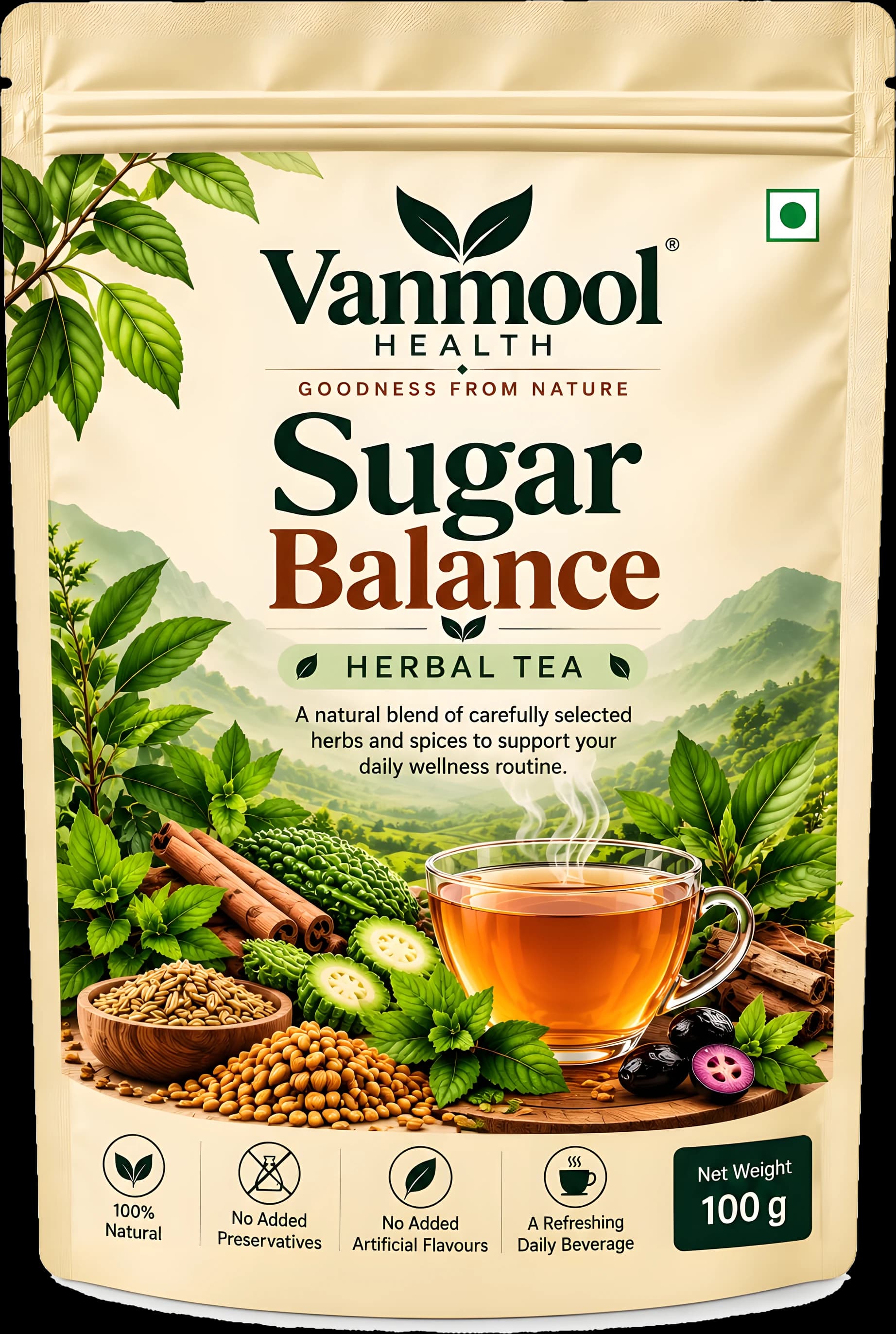
Mulethi is one of the twelve herbs in our Sugar Balance blend, a small share by weight, taken at 2 g in 200 ml, simmered covered for five to seven minutes; Cholesterol Balance has none. The Sugar Balance pack says plainly to ask your doctor first if you have high blood pressure, and that line is there because of everything above.
One product to know about by name: deglycyrrhizinated liquorice, sold as DGL, has the glycyrrhizin removed and carries fewer of these cautions. It is not what a pansari sells, and mulethi in a pan is the whole root with the glycyrrhizin in it.
If you do drink it, do so once a day at most, keep your home readings going, and never let a cup stand in for a tablet. The medicine is what manages your blood pressure. The herb is a flavour that happens to need a conversation.
Herbs in this piece: Mulethi
People also ask
01Can I have mulethi if I take water tablets or digoxin?
Ask your doctor or pharmacist first. Diuretics such as furosemide, hydrochlorothiazide and chlorthalidone already push potassium down, and mulethi can take it further. Digoxin becomes more toxic when potassium is low, which is why liquorice is specifically listed as something to avoid alongside it. Corticosteroids such as prednisolone are another documented pairing.
02What are the signs of too much liquorice?
Headaches, swollen ankles, unusual tiredness, muscle weakness or cramps, palpitations, and home BP readings running higher than usual. None is specific to liquorice, so the habit often goes unnoticed. If they appear, stop the mulethi and tell your doctor, who can check your potassium, but do not stop or change a blood pressure tablet meanwhile.
03Is DGL liquorice different from the mulethi sold at a pansari?
Yes. Deglycyrrhizinated liquorice, sold as DGL, has the glycyrrhizin removed and carries fewer of the blood pressure and potassium cautions. It is not what a pansari sells. Mulethi simmered in a pan is the whole root with the glycyrrhizin still in it, so the cautions for BP tablets apply to it in full.
Sources
Elsewhere on this site
Related reading
Vanmool infusions are food products, not medicines. They are not intended to diagnose, treat, cure or prevent any disease. If you are pregnant, nursing, taking medication or managing a medical condition, please speak to your doctor before use.