Reference · 20 drinks · per serving
How much caffeine is in the cup?
Also searched as: caffeine in green tea vs coffee · does herbal tea have caffeine · chai mein kitna caffeine hota hai · tea without caffeine
In short
A glass of masala chai carries about 30 to 50 mg of caffeine, a cup of plain black tea 40 to 70 mg, green tea 20 to 45 mg, a small tumbler of South Indian filter coffee 50 to 90 mg and a cup of brewed coffee 80 to 120 mg. Kadha, tulsi, lemongrass, mint, chamomile and rooibos have none, because none of them is the tea plant. Health agencies put the usual daily ceiling for healthy adults at about 400 mg, and about 200 mg in pregnancy.
Caffeine comes from a handful of plants: the tea bush (Camellia sinensis), the coffee tree, the cacao tree, and a few others such as guarana and yerba mate. Anything made from those carries it; anything that is not, however bitter, strong or warming it tastes, does not. That is why a peppery kadha has zero and a mild green tea does not, and why a herbal blend should be read for what is in it rather than how it tastes.
The figures below are ranges because the leaf, the roast, how much goes in and how long it steeps move the number more than the kind of drink does. A CTC chai boiled hard with a heaped spoon of leaf sits at the top of its range; a Darjeeling brewed gently sits at the bottom. Serving size matters as much: an espresso shot and a cup of green tea hold similar caffeine in very different volumes.
Per serving, as poured
| Drink | Serving | Caffeine, mg |
|---|---|---|
| Coffee | ||
| South Indian filter coffeeStrong decoction, diluted with milk; chicory blends sit at the lower end. | small tumbler, 120 ml | 50 to 90 |
| Brewed or French-press coffeeThe most caffeine of anything on this list, cup for cup. | 200 ml cup | 80 to 120 |
| Instant coffeeA heaped spoon takes it higher; the milk does not change it. | 1 teaspoon in 200 ml | 50 to 80 |
| EspressoSmall volume, high strength; a latte or cappuccino carries one or two shots. | single shot, 30 ml | 60 to 75 |
| Tea (Camellia sinensis) | ||
| Black tea, plainAssam and CTC leaf run higher than Darjeeling; longer steeping, more. | 200 ml, 3 to 5 min | 40 to 70 |
| Masala chai or milk chai (CTC)Boiled hard, so the leaf gives up most of what it has; milk thins the glass but not the caffeine. | one glass, 150 ml | 30 to 50 |
| Green teaAbout half of black tea; cooler water and a shorter steep keep it at the low end. | 200 ml, 2 to 3 min | 20 to 45 |
| Kashmiri kahwaA green tea base simmered with spices and saffron. | small cup, 150 ml | 15 to 35 |
| Noon chai (pink salt tea)Gunpowder green tea boiled long with soda and milk. | cup, 200 ml | 20 to 40 |
| Oolong teaBetween green and black, as its processing is. | 200 ml | 30 to 50 |
| White teaYoung buds, lightly processed, brewed cool. | 200 ml | 15 to 30 |
| Decaf tea or coffeeDecaffeinated, not caffeine-free; a trace remains. | 200 ml | 2 to 5 |
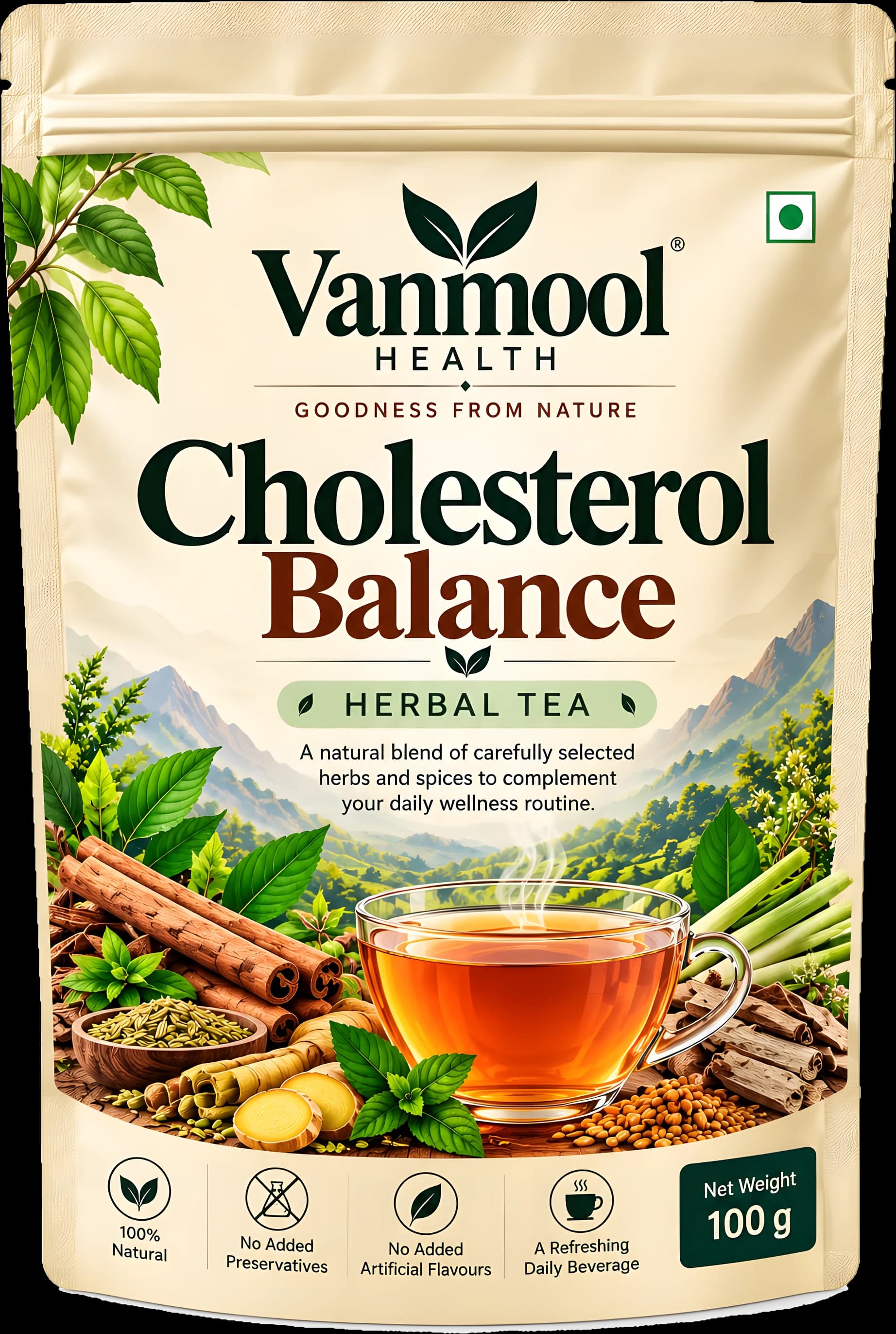
| Vanmool Cholesterol BalanceGreen tea leaf is one of eight ingredients in a 2 g dose, so a cup carries a fraction of a cup of green tea. | 2 g in 200 ml, simmered | low |
| Herbal infusions: no caffeine | ||
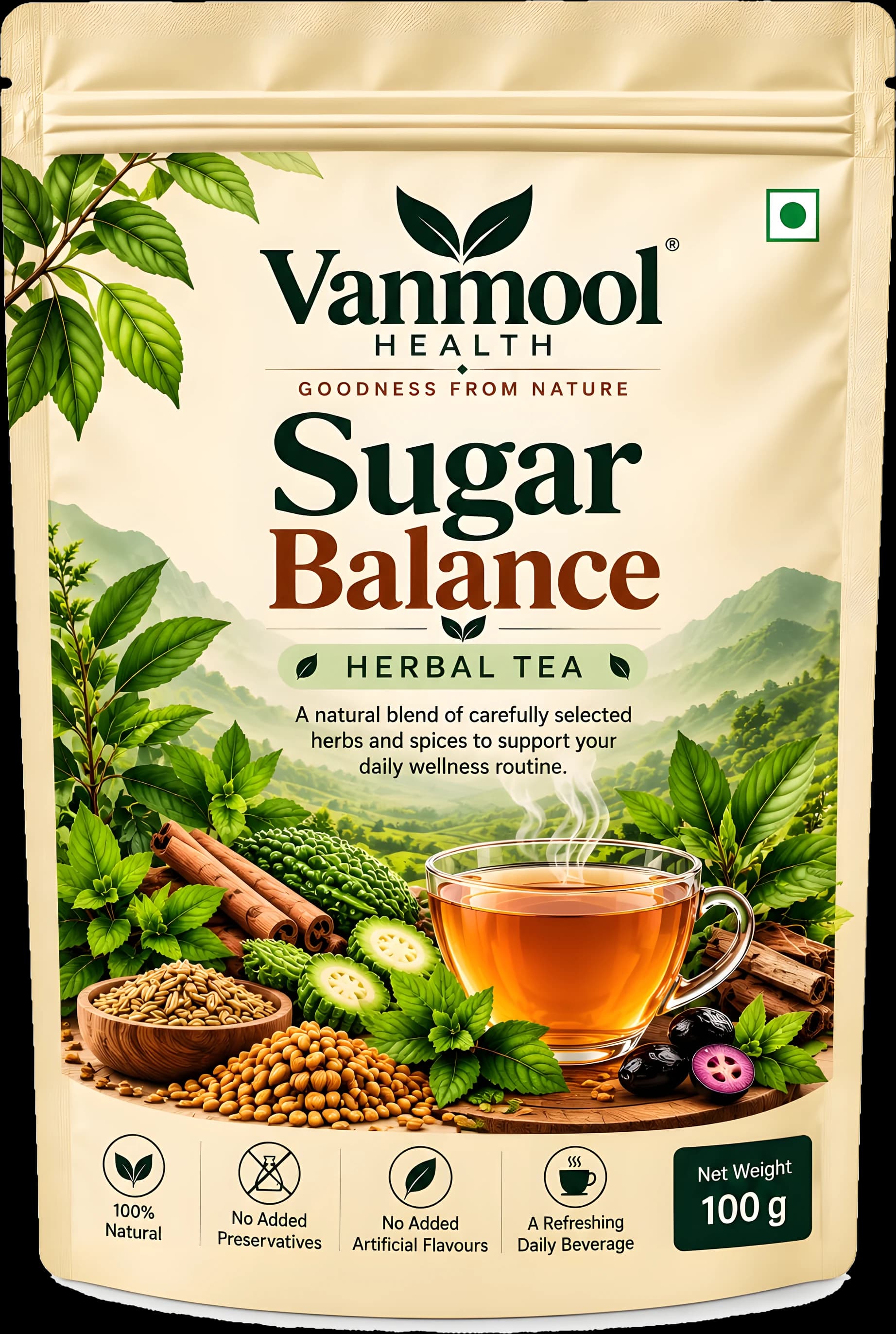
| Vanmool Sugar BalanceNo tea leaf in it; twelve herbs and spices, none with caffeine. | 2 g in 200 ml, simmered | 0 |
| Kadha (tulsi, ginger, pepper, cinnamon)No Camellia sinensis, no caffeine, however strong it tastes. | 200 ml | 0 |
| Tulsi, lemongrass, mint or chamomile teaLeaf infusions without tea leaf. Check blends: some add black or green tea. | 200 ml | 0 |
| Rooibos (red bush)A South African shrub, not a tea plant. | 200 ml | 0 |
| Other | ||
| ColaAdded caffeine; a 500 ml bottle is two and a half of these. | 200 ml | 15 to 25 |
| Energy drinkAbout a cup of brewed coffee, with sugar on top. | 250 ml can | 75 to 80 |
| Dark chocolateMore cocoa, more caffeine; milk chocolate has a few milligrams. | 30 g | 15 to 25 |
What the public guidance says
The European Food Safety Authority puts a daily intake of up to about 400 mg, and single doses up to about 200 mg, as not raising safety concerns for healthy adults; the NHS advises keeping to 200 mg a day in pregnancy. Four glasses of chai or three cups of filter coffee reach 200 mg; children and anyone sensitive to caffeine, or taking medicine their doctor has flagged, should take their own doctor's figure over any table.
People also ask
01Does herbal tea have caffeine?
Not if it is made only of herbs, spices, flowers or fruit: tulsi, lemongrass, mint, chamomile, hibiscus, rooibos and kadha are all caffeine-free. A herbal blend that lists green or black tea leaf among its ingredients does carry some, in proportion to how much leaf is in it.
02Which has more caffeine, chai or coffee?
Coffee. A glass of milk chai is roughly 30 to 50 mg; a cup of brewed coffee is 80 to 120 mg and even a small tumbler of filter coffee is 50 to 90 mg. Two chais are about one coffee.
03Does green tea have less caffeine than black tea?
Usually about half, cup for cup: 20 to 45 mg against 40 to 70 mg. The leaf is the same plant; the lower number comes from cooler water, shorter steeping and lighter processing.
04Is there a tea without caffeine?
Any infusion that is not from the tea plant: tulsi, lemongrass, mint, chamomile, kadha, rooibos, or a blend built only from herbs and spices such as Sugar Balance. Decaf tea still carries 2 to 5 mg.
05How much caffeine is in Vanmool blends?
Sugar Balance has none; it contains no tea leaf. Cholesterol Balance lists green tea leaf among its eight ingredients, so a cup has a fraction of the caffeine of a cup of plain green tea; we do not state a figure because it depends on the leaf lot and how long you simmer it.
Sources
Related
The figures are typical ranges published by food agencies and the tea and coffee trade, for the servings shown. They describe drinks, not what caffeine does for any condition. If your doctor has told you to limit caffeine, their number applies, not this table.