Lemongrass लेमनग्रास
Gavti Chai (लेमनग्रास) is called Lemongrass in English, Lemongrass in Hindi. Its botanical name is Cymbopogon citratus. Also searched as: gavti chaha in english · gavti chai · lemon grass in hindi.
Bright citrus stalks that keep Sugar Balance light.
Also called: Hari chai patti · Nimbu ghas · Gavti chaha (Marathi) · Cymbopogon citratus. In English: Lemongrass.
Lemongrass (Cymbopogon citratus) is a tall, clumping tropical grass with long, narrow leaves and pale, fibrous stalks that smell strongly of lemon. In Maharashtra it is gavti chaha, 'grass tea', a name that says how it is most often used there. Close relatives are grown in Kerala and elsewhere in India for lemongrass oil.
It is an easy plant in a warm climate. A single rooted stalk planted in sun becomes a dense clump within a season, and the leaves can be cut back several times a year. For tea, the leaves and stalks are cut, chopped and dried in the shade; drying in strong sun or at high heat drives off the lemony oil that is the whole point of the plant.
Lemongrass tastes of lemon without any of the sourness, along with something grassy and faintly gingery. The citrus smell comes mostly from citral, the same compound found in lemon peel. Fresh stalks are juicier and brighter; dried leaf is gentler but keeps the same character. The sharper smell some people know from mosquito repellents comes from a related plant, citronella grass, rather than the kitchen lemongrass.
In western India a few leaves of gavti chaha go into the morning chai, especially in the monsoon. Elsewhere it is used in herbal teas and, more and more, in home cooking influenced by Thai and north-eastern cuisines, where the bruised stalk flavours broths and curries and is lifted out before serving. It also grows happily in a pot on a sunny balcony, and a fresh stalk from the garden can be bruised and added to the pan alongside a blend.
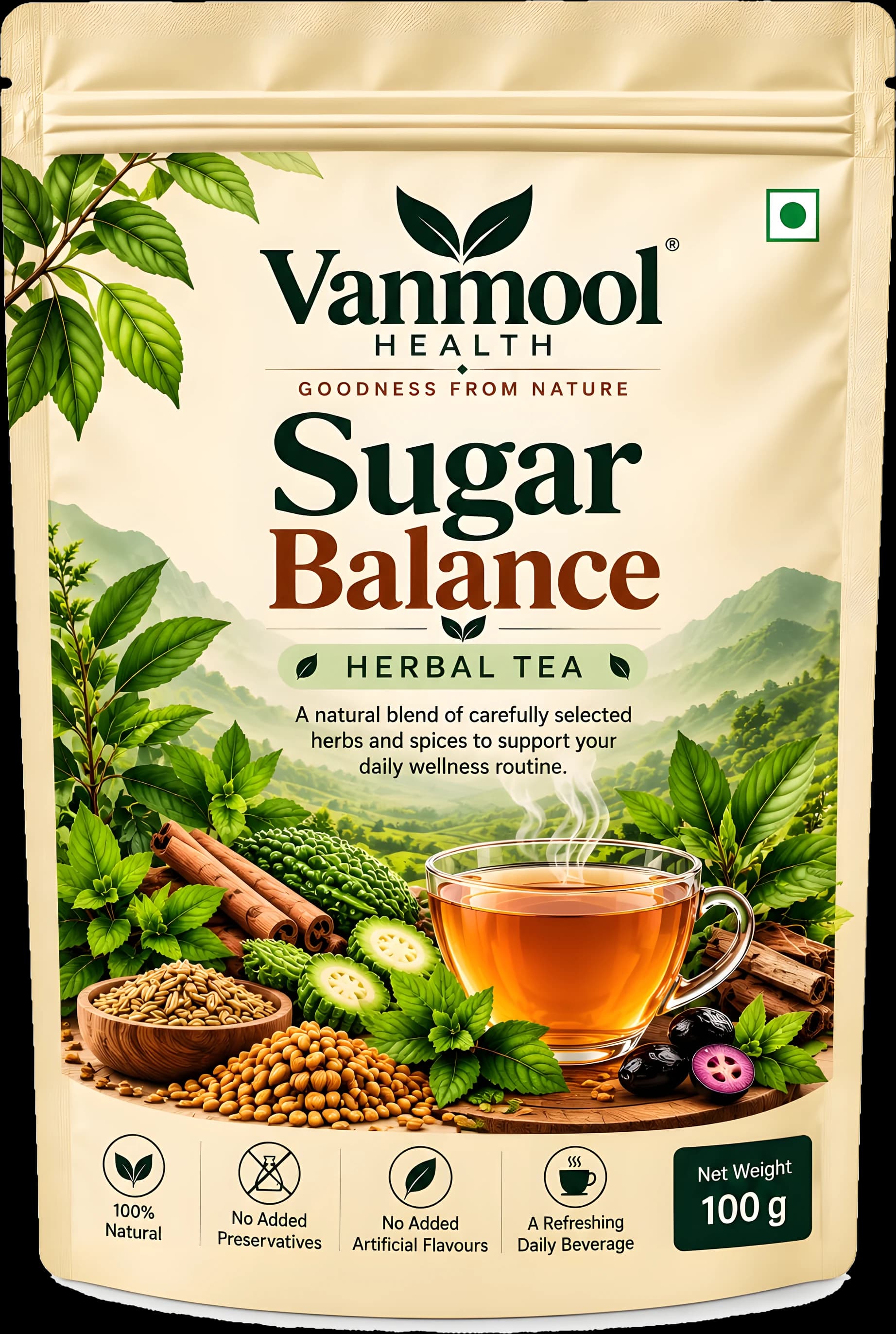
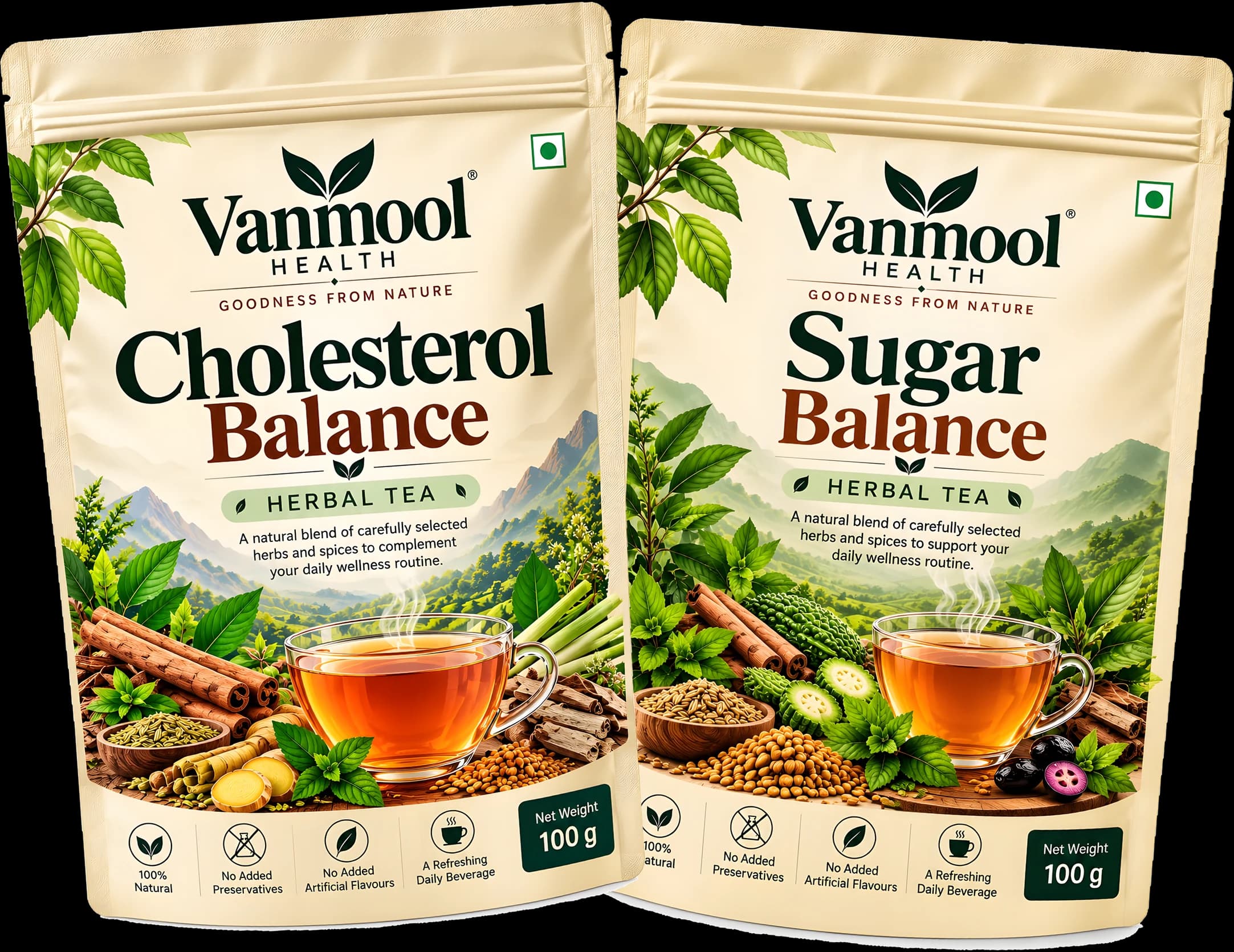
In Sugar Balance lemongrass is the bright note. Gudmar, methi, jamun seed and vijaysar are earthy and bitter, and lemongrass lightens the cup so it tastes fresh rather than heavy. Its oils come out quickly and are volatile, so in an open pan the lemon smell fills the kitchen and leaves the cup. Covered on a low flame, and rested for a minute with the lid on as the Sugar Balance pack asks, it stays in the drink.
Dried lemongrass is one of the quicker herbs to fade. Keep it sealed, dark and dry; if a pinch rubbed between your fingers no longer smells of lemon, it has lost most of what it had to give. Fresh stalks keep for a week or two wrapped in the fridge, or can be frozen whole and used straight from the freezer.
What has been studied about lemongrass
Most of the research on lemongrass has been done on its essential oil rather than on a cup of tea. In the laboratory the oil, which is mostly citral, has been tested against bacteria, fungi and the insects it is meant to repel, and that is where its reputation for being 'antimicrobial' comes from. A cup of simmered leaf contains only a small trace of that oil, so laboratory results on the concentrated oil say little about the drink.
Human studies are few and small. Lemongrass tea has been looked at for its traditional uses in digestion and as a calming drink, and some studies have measured whether it affects blood pressure or cholesterol in the short term. None of this adds up to firm conclusions; the evidence is limited. Lemongrass in a blend is there as a food, for its fresh citrus taste, not as a treatment for anything.
Side effects, and who should be careful
Lemongrass is a common food across Asia and a cup of the leaf is generally well tolerated. The fresh leaf has sharp edges and can scratch or irritate skin when handled in quantity, and the essential oil is a different matter altogether: it is concentrated, can irritate skin and should never be drunk.
Lemongrass has traditionally been used in some places to bring on menstruation, and there is little safety data on regular use in pregnancy, so if you are pregnant or breastfeeding it is sensible to ask your doctor before drinking it daily. Anyone with a known allergy to grasses should start with a small amount.
How to use it
In Maharashtra a few leaves of gavti chaha go into the morning chai, especially in the monsoon, and across the north-east and in Thai-style cooking the bruised stalk flavours broths and curries before being lifted out. It is one of the easiest herbs to grow: a rooted stalk in a sunny pot becomes a clump within a season.
For a plain cup, put a teaspoon of dried leaf, or one fresh stalk bruised with the back of a knife and cut into pieces, into 200 ml of water. Bring it to a gentle boil, cover, and simmer on a low flame for about five minutes, then rest it covered for a minute and strain. It can also be steeped for five minutes in water just off the boil, which gives a lighter cup.
Lemongrass oils are volatile. In an open pan the lemon smell fills the kitchen and leaves the cup, so the lid matters more for this herb than for most. In Sugar Balance it is the bright note against the earthy gudmar, methi, jamun seed and vijaysar, and the covered simmer the pack asks for keeps that brightness in the drink.
Questions people ask
01What is lemongrass called in Hindi?
Usually just lemongrass, and in some markets hari chai patti or nimbu ghas. In Marathi it is gavti chaha, 'grass tea'.
02Can I drink lemongrass tea every day?
A cup or two a day is a normal food habit in many places and is generally well tolerated. If you are pregnant or have a medical condition, ask your doctor first.
03Does lemongrass tea have caffeine?
No. Lemongrass is a grass, not a tea plant, and a cup of it contains no caffeine. Sugar Balance, which uses it, is caffeine-free.
04What are the side effects of lemongrass?
In a cup, very few; it is widely eaten as a food. The concentrated essential oil is different and can irritate skin and should not be swallowed.
05Is lemongrass the same as citronella?
They are close relatives but different plants. The sharp smell of mosquito repellents comes from citronella grass; kitchen lemongrass is Cymbopogon citratus and tastes of lemon.
06What is lemongrass called in Hindi?
Lemongrass (लेमनग्रास). The botanical name is Cymbopogon citratus. Other Indian names: Hari chai patti, Nimbu ghas, Gavti chaha (Marathi), Cymbopogon citratus.
Sources
Making it at home, on its own
Take two fresh lemongrass stalks, trim the roots and the dry tops, bruise the stalks with a rolling pin and cut them into finger lengths. Simmer them covered in 250 ml of water for five minutes and strain; or use a teaspoon of dried, cut lemongrass the same way. Step by step: lemongrass tea from the garden pot
Lemongrass in Hindi and other Indian languages, and how to spot it in a shop
With medicines, in pregnancy, for children
What is documented for lemongrass alongside each common kind of medicine, one page per pair.
- Thyroid · Fine, with a habit to keep
- Diabetes · No documented concern at a cup a day
- Blood thinners · No documented concern at a cup a day
- Blood pressure · No documented concern at a cup a day
- Statins · No documented concern at a cup a day
- Pregnancy · Tell your doctor before it becomes daily
- Children · No documented concern at a cup a day
Read more: Lemongrass tea: what it is, how to make it, side effects; Gudmar tea: how to make it and who should avoid it
Vanmool infusions are food products, not medicines. They are not intended to diagnose, treat, cure or prevent any disease. If you are pregnant, nursing, taking medication or managing a medical condition, please speak to your doctor before use.