Kadha · Herbal tea
Kadha and herbal tea: a decoction and an infusion
Also searched as: kadha vs herbal tea · difference between kadha and herbal tea · kadha aur herbal tea mein antar
In short
Both are plants in hot water with no tea leaf. A kadha is a decoction: whole or crushed herbs and spices, tulsi, ginger, black pepper, cinnamon, clove, simmered in a pan for 10 to 15 minutes until the water reduces, then strained; it is strong, dark and peppery. A herbal tea is an infusion: dried, finely cut herbs in a bag or a spoon, steeped in hot water for a few minutes with no flame; lighter, milder and quicker. Often the same plants, at a different strength.
Kadha comes from the Sanskrit kvatha, a decoction, and the household version has barely changed: two glasses of water in a pan, a few tulsi leaves, a thumb of adrak crushed on the chakla, four or five black peppercorns, a piece of dalchini, a couple of laung, sometimes mulethi or ajwain. It boils until it has gone down by a third or a half, is strained into a steel glass and sweetened with gud or honey. Every family has its own list and its own idea of how long. It is a monsoon and winter drink, made fresh, and the taste is thick, pungent and hot from the pepper and ginger.
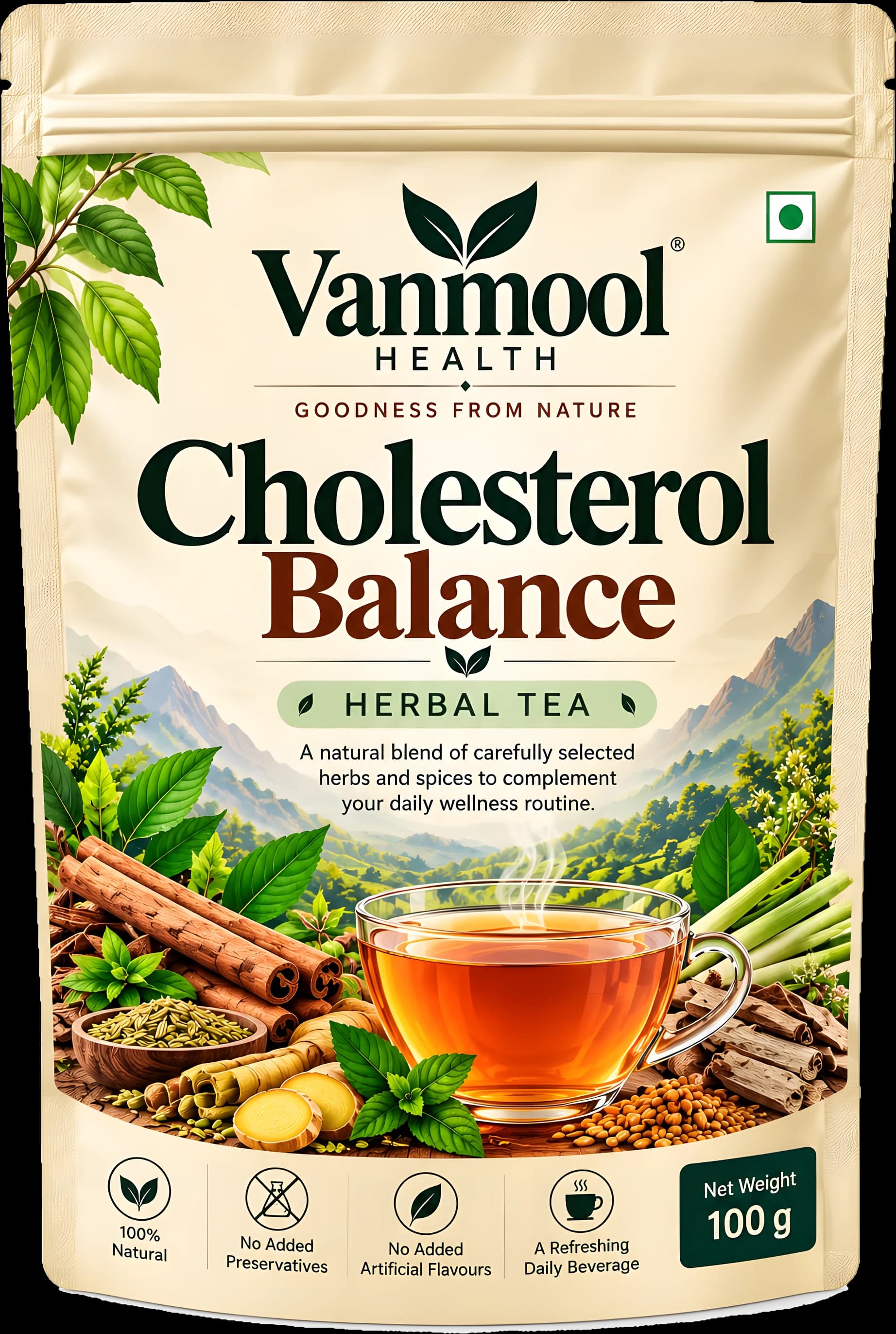
A herbal tea in a bag is the opposite method. The herbs are dried and cut small so that water reaches them fast, and they are steeped, not boiled: just-boiled water poured over, three to five minutes, no flame, no reduction. Chamomile, peppermint, tulsi, lemongrass and hibiscus all come this way. The cup is milder and the same every time, because the bag is measured. Loose blends built on bark, root and seed sit in between. Vanmool's two blends, for instance, are simmered covered on a low flame for five to seven minutes, 2 g to 200 ml, a short decoction, because cinnamon, dried ginger and methi give up little in a three-minute steep.
Telling them apart is easy: a kadha needs a pan, a flame and fifteen minutes, and no two batches taste alike; a herbal tea needs a cup and a kettle and tastes the same on Tuesday as on Monday. The ingredients of a kadha come from the masala dabba, so it costs almost nothing; bags cost by the bag. The word has also moved onto packets lately, as kadha mix or kadha powder, which are herbal blends you are still meant to simmer, so read the method on the pack. The tulsi kadha page on this site has one plain recipe.
Side by side
| Kadha | Herbal tea | |
|---|---|---|
| Method | Simmered 10 to 15 min, reduced | Steeped 3 to 5 min, no flame |
| Form of herbs | Fresh or whole: leaf, crushed root, spice | Dried, cut small, often in a bag |
| Strength | Strong, dark, peppery | Light to medium |
| Usual plants | Tulsi, adrak, kali mirch, dalchini, laung | Chamomile, mint, tulsi, lemongrass |
| Sweetener | Gud or honey, at the end | Usually none |
| Time | About 15 to 20 minutes | About 5 minutes |
| Consistency | Changes with every batch | Same cup each time |
Which one, when
Kadha: Make a kadha when you want a strong, hot, peppery glass on a monsoon or winter evening and have fifteen minutes and a pan; the tulsi kadha page gives a plain version.
Herbal tea: Reach for a herbal tea when you want a mild cup fast, at a desk or late at night, or a measured blend that tastes the same every day; Vanmool's blends sit between the two, simmered five to seven minutes.
People also ask
01Is kadha the same as herbal tea?
Same idea, plants in hot water with no tea leaf, but a different method. A kadha is simmered and reduced, a decoction; a herbal tea is steeped, an infusion. A kadha is the stronger of the two.
02Can I make a kadha from a herbal tea bag?
Simmering a bag for ten minutes gives a stronger cup, but finely cut herbs turn harsh and dusty with a long boil. A kadha works better from whole spices and fresh adrak, which can take the time.
03Why does kadha taste so strong?
Black pepper, ginger and clove are pungent on their own, and reducing the water concentrates them. Use fewer peppercorns, simmer less, or top the glass up with hot water.
Sources
All about kadha · यह पेज हिन्दी में
More comparisons
- Green tea / Black tea
- Green tea / Milk chai
- Herbal tea / Green tea
- Gud (jaggery) / White sugar
- Stevia leaf / White sugar
- Mishri (rock sugar) / White sugar
- Ceylon cinnamon / Cassia (common dalchini)
- Adrak (fresh ginger) / Sonth (dry ginger)
- Choti elaichi (green cardamom) / Badi elaichi (black cardamom)
- Jeera (cumin) / Shahi jeera (black cumin)
- Methi dana (fenugreek seeds) / Kasuri methi (dried fenugreek leaves)
- Tulsi (holy basil) / Sweet basil (Italian basil)
- Sabja seeds (sweet basil seeds) / Chia seeds
- Kala namak (black salt) / Sendha namak (rock salt)
- Rai (small brown mustard) / Sarson (yellow mustard)
- Dahi (curd) / Yogurt, including Greek yogurt
- Ghee / Butter (makkhan)
- Paneer / Chhena
- Atta (whole wheat flour) / Maida (refined flour)
- Suji (semolina, rava) / Daliya (broken wheat)
- Tej patta (Indian bay leaf) / Bay leaf (Mediterranean bay laurel)
- Kalonji (nigella seeds) / Kala til (black sesame)
- Jaiphal (nutmeg) / Javitri (mace)
- Kesar (saffron) / Kesari rang (orange food colour)
- CTC tea / Orthodox tea (leaf tea)
- Ragi (finger millet) / Jowar and bajra (sorghum and pearl millet)
- Besan (gram flour) / Atta (whole wheat flour)
- Nariyal tel (coconut oil) / Sarson ka tel (mustard oil)
- Brown rice / White rice
- Poha (flattened rice) / Murmura (puffed rice)
These pages compare foods as foods: what they are, how they are made and how they cook. Nothing here says one is healthier or does anything for a condition. If you manage a health condition or take regular medicine, your doctor and dietitian decide what belongs in your kitchen.