Herbal tea · Green tea
Herbal tea and green tea: one of them has no tea in it
Also searched as: herbal tea vs green tea · difference between herbal tea and green tea · is herbal tea the same as green tea
In short
Green tea is the leaf of the tea plant, Camellia sinensis, and carries caffeine. A herbal tea, properly a tisane, has no tea leaf at all: it is herbs, spices, flowers or roots in hot water, such as chamomile, tulsi water, or Vanmool's Sugar Balance blend of cinnamon, fennel, lemongrass and nine other plants, and it has no caffeine unless a tea leaf has been added. Green tea is steeped briefly below the boil; most herbal blends are simmered or steeped longer and taste of whatever is in them.
Tea, strictly, is one plant: Camellia sinensis, whose leaf becomes green, black, white or oolong tea depending on how it is processed. Green tea is that leaf heated soon after picking so it does not oxidise. A herbal tea borrows the word because of the cup and the bag, but it is an infusion of other plants altogether: chamomile flowers, peppermint, tulsi, lemongrass, hibiscus, fennel seed, dried ginger, cinnamon bark. Kadha, saunf water and jeera water are all herbal teas in this sense. Caffeine occurs in the tea plant, coffee, cocoa and a few others; a herbal blend has none unless green or black leaf is part of it.
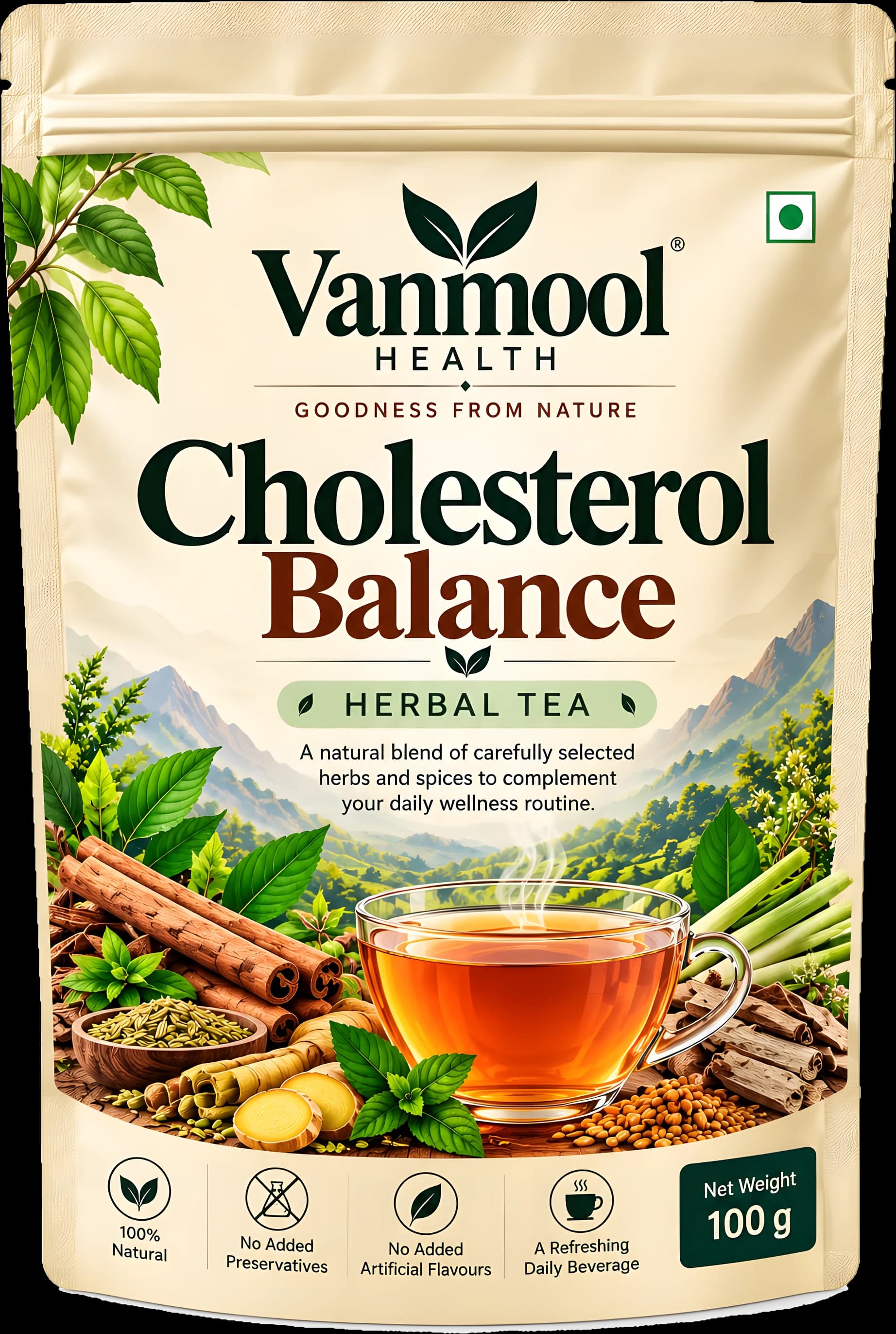
The confusion is mostly the shelf. Shops stack them together, both come in bags, and the names overlap: a box labelled green tea with tulsi is green tea, with caffeine, while a box labelled herbal infusion sometimes lists green tea halfway down its ingredients. The ingredient list settles it. If Camellia sinensis, green tea or black tea appears, the cup has caffeine; if not, it does not. Vanmool's two blends show both cases: Cholesterol Balance has green tea leaf in it and so contains some caffeine; Sugar Balance has no tea leaf and none.
In the cup, green tea is one note, grassy and lightly astringent, and it is fussy: water at 75 to 80 °C, two to three minutes, bitter if you forget it. Herbal blends are the opposite. Bark, root and seed, cinnamon, dried ginger, methi, fennel, give up their taste slowly, so a blend built on them is simmered covered for five to seven minutes, 2 g to 200 ml, then rested a minute and strained; leaf and flower blends steep about five minutes. Left too long, a herbal blend mostly gets stronger rather than bitter. Their taste ranges wide, from the sweetness of fennel, mulethi and stevia leaf to the heat of ginger.
Side by side
| Herbal tea | Green tea | |
|---|---|---|
| Plant | Many: herbs, spices, flowers, roots | One: Camellia sinensis leaf |
| Caffeine | None, unless tea leaf is added | Yes, about 20 to 45 mg per 200 ml |
| Processing | Dried, cut, blended | Heated after picking, rolled, dried |
| Taste | Depends on the blend: sweet, spicy, grassy | Grassy, fresh, lightly astringent |
| Water and time | Simmer 5 to 7 min, or steep 5 min | 75 to 80 °C, 2 to 3 minutes |
| Left too long | Gets stronger, rarely bitter | Turns bitter quickly |
| Evening cup | Common; no caffeine | Has caffeine |
Which one, when
Herbal tea: Reach for a herbal blend when you want a cup with no caffeine, after dinner or late at night, or when you want spice and sweetness without the taste of tea leaf; Sugar Balance is a cup like this.
Green tea: Reach for green tea when you want the taste of tea itself, light and plain, in the morning or afternoon, and have a thermometer-free way to let the water cool a minute first.
People also ask
01Does herbal tea have caffeine?
Not unless a tea leaf has been added. Read the ingredient list: green tea with tulsi is green tea and has caffeine; a blend of only herbs, spices and flowers has none.
02Is green tea a herbal tea?
No, in the strict sense. Green tea is true tea, from Camellia sinensis. A herbal tea is any other plant steeped in hot water. Shops shelve them together, which is where the mix-up starts.
03Can the two be mixed?
Yes, and many blends do it. Cholesterol Balance pairs green tea with mint, tulsi, arjuna, dried ginger and spices. The cup then has green tea's caffeine, so it is a morning or afternoon blend rather than a bedtime one.
Sources
All about herbal tea · All about green tea · यह पेज हिन्दी में
More comparisons
- Green tea / Black tea
- Green tea / Milk chai
- Kadha / Herbal tea
- Gud (jaggery) / White sugar
- Stevia leaf / White sugar
- Mishri (rock sugar) / White sugar
- Ceylon cinnamon / Cassia (common dalchini)
- Adrak (fresh ginger) / Sonth (dry ginger)
- Choti elaichi (green cardamom) / Badi elaichi (black cardamom)
- Jeera (cumin) / Shahi jeera (black cumin)
- Methi dana (fenugreek seeds) / Kasuri methi (dried fenugreek leaves)
- Tulsi (holy basil) / Sweet basil (Italian basil)
- Sabja seeds (sweet basil seeds) / Chia seeds
- Kala namak (black salt) / Sendha namak (rock salt)
- Rai (small brown mustard) / Sarson (yellow mustard)
- Dahi (curd) / Yogurt, including Greek yogurt
- Ghee / Butter (makkhan)
- Paneer / Chhena
- Atta (whole wheat flour) / Maida (refined flour)
- Suji (semolina, rava) / Daliya (broken wheat)
- Tej patta (Indian bay leaf) / Bay leaf (Mediterranean bay laurel)
- Kalonji (nigella seeds) / Kala til (black sesame)
- Jaiphal (nutmeg) / Javitri (mace)
- Kesar (saffron) / Kesari rang (orange food colour)
- CTC tea / Orthodox tea (leaf tea)
- Ragi (finger millet) / Jowar and bajra (sorghum and pearl millet)
- Besan (gram flour) / Atta (whole wheat flour)
- Nariyal tel (coconut oil) / Sarson ka tel (mustard oil)
- Brown rice / White rice
- Poha (flattened rice) / Murmura (puffed rice)
These pages compare foods as foods: what they are, how they are made and how they cook. Nothing here says one is healthier or does anything for a condition. If you manage a health condition or take regular medicine, your doctor and dietitian decide what belongs in your kitchen.