Green tea · Milk chai
Green tea and milk chai: the same leaf, a very different cup
Also searched as: green tea vs chai · difference between green tea and milk tea · green tea aur chai mein kya antar hai
In short
Both begin as the leaf of Camellia sinensis. Green tea is leaf heated soon after picking, steeped plain in hot but not boiling water and drunk without milk. Milk chai is CTC black tea, oxidised leaf cut into hard granules, boiled with water, milk and sugar, often with ginger or cardamom. A cup of chai carries milk and one or two spoons of sugar; a cup of green tea carries neither, and its leaf gives roughly half the caffeine of black leaf.
Indian chai is made with CTC tea, short for crush, tear, curl, a machine process developed in Assam in the 1930s that cuts oxidised black leaf into small, dense granules. Those granules give colour and strength within a minute of boiling, which is why chai is made the way it is: leaf into boiling water, milk poured in, sugar, a hard boil for a few minutes, strained into a glass. Green tea is the same plant handled the other way round. The fresh leaf is heated by pan or steam within hours of picking so it never oxidises, then rolled and dried; it stays green and is steeped, never boiled.
The confusion comes from the word itself: in Hindi both are chai, and most Indian homes met green tea only in the last fifteen years, as tea bags, and tried to make it like the chai they knew, with boiling water and sometimes milk. Made that way it turns bitter and flat. In the cup the two could not look less alike: chai is opaque, tan to brown, sweet, milky and spiced; green tea is clear, pale yellow-green and grassy. Caffeine comes from the leaf in both. Brewed plain, 200 ml of black tea carries about 40 to 70 mg and green tea about 20 to 45 mg; in chai, part of the cup is milk, which thins what you get.
They want opposite handling. Green tea wants water off the boil, 75 to 80 °C, and two to three minutes; a longer or hotter steep brings out astringency fast. CTC black leaf wants the opposite and is the only leaf that stands up to ten minutes with milk and sugar in a pan. Kashmir has the one classic exception: noon chai, the pink salted tea, is made by boiling a Kashmiri green leaf for a long time with a pinch of soda, then adding milk and salt. Everywhere else, green tea is drunk plain, and chai is milk, sugar and CTC.
Side by side
| Green tea | Milk chai | |
|---|---|---|
| Leaf | Camellia sinensis, unoxidised | Camellia sinensis, CTC black |
| Made by | Steeping in hot water | Boiling with water, milk, sugar |
| Milk and sugar | None | Milk; usually 1 to 2 spoons sugar |
| Look | Clear, pale yellow-green | Opaque, tan to brown |
| Taste | Grassy, light, lightly astringent | Strong, sweet, milky, spiced |
| Caffeine, leaf brewed plain | About 20 to 45 mg per 200 ml | About 40 to 70 mg per 200 ml |
| Water and time | 75 to 80 °C, 2 to 3 minutes | Rolling boil, 5 to 10 minutes |
Which one, when
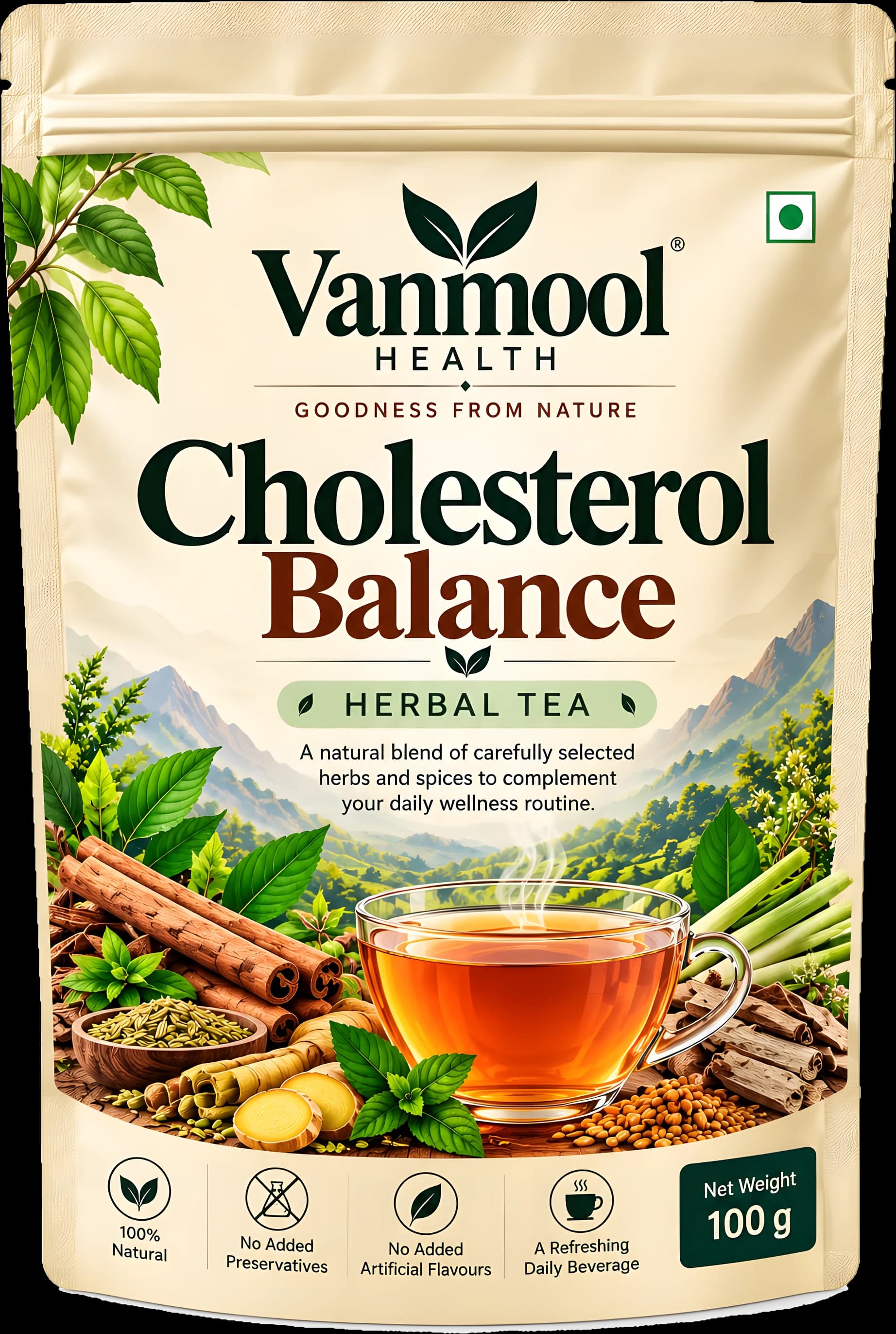
Green tea: Reach for green tea when you want a light, plain cup without milk or sugar, in the morning or afternoon, or as the base of a simmered blend, which is how it sits in Cholesterol Balance.
Milk chai: Reach for milk chai for the morning glass India runs on, with ginger in winter and cardamom any time; it is the cup that takes sugar, biscuits and a long boil.
People also ask
01Can I make green tea with milk like chai?
You can, but boiling green leaf with milk gives a bitter, flat cup. Kashmiri noon chai is the one tradition that does it, with soda and salt and a special leaf. For ordinary green tea, steep it plain and short.
02Which has more caffeine, green tea or chai?
Brewed plain, black CTC leaf gives about 40 to 70 mg per 200 ml and green leaf about 20 to 45 mg. A glass of chai is partly milk, so the gap narrows. A cup of filter coffee usually has more than either.
03Is green tea just chai patti without milk?
No. Chai patti is black, oxidised leaf, and black tea without milk is still black tea. Green tea is leaf heated before it can oxidise; it is a different process from the same plant.
Sources
All about green tea · यह पेज हिन्दी में
More comparisons
- Green tea / Black tea
- Herbal tea / Green tea
- Kadha / Herbal tea
- Gud (jaggery) / White sugar
- Stevia leaf / White sugar
- Mishri (rock sugar) / White sugar
- Ceylon cinnamon / Cassia (common dalchini)
- Adrak (fresh ginger) / Sonth (dry ginger)
- Choti elaichi (green cardamom) / Badi elaichi (black cardamom)
- Jeera (cumin) / Shahi jeera (black cumin)
- Methi dana (fenugreek seeds) / Kasuri methi (dried fenugreek leaves)
- Tulsi (holy basil) / Sweet basil (Italian basil)
- Sabja seeds (sweet basil seeds) / Chia seeds
- Kala namak (black salt) / Sendha namak (rock salt)
- Rai (small brown mustard) / Sarson (yellow mustard)
- Dahi (curd) / Yogurt, including Greek yogurt
- Ghee / Butter (makkhan)
- Paneer / Chhena
- Atta (whole wheat flour) / Maida (refined flour)
- Suji (semolina, rava) / Daliya (broken wheat)
- Tej patta (Indian bay leaf) / Bay leaf (Mediterranean bay laurel)
- Kalonji (nigella seeds) / Kala til (black sesame)
- Jaiphal (nutmeg) / Javitri (mace)
- Kesar (saffron) / Kesari rang (orange food colour)
- CTC tea / Orthodox tea (leaf tea)
- Ragi (finger millet) / Jowar and bajra (sorghum and pearl millet)
- Besan (gram flour) / Atta (whole wheat flour)
- Nariyal tel (coconut oil) / Sarson ka tel (mustard oil)
- Brown rice / White rice
- Poha (flattened rice) / Murmura (puffed rice)
These pages compare foods as foods: what they are, how they are made and how they cook. Nothing here says one is healthier or does anything for a condition. If you manage a health condition or take regular medicine, your doctor and dietitian decide what belongs in your kitchen.