Green tea · Black tea
Green tea and black tea: same plant, different leaf
Also searched as: green tea vs black tea · difference between green tea and black tea · is green tea and black tea from the same plant
In short
Green tea and black tea come from the same plant, Camellia sinensis. The difference is what happens after picking: green tea leaf is heated within hours to stop it changing, so it stays green and grassy; black tea leaf is rolled and left to oxidise until it turns dark, malty and strong. Black tea has roughly twice the caffeine of green tea in a typical cup, and takes milk and sugar; green tea is usually drunk plain.
Every true tea, green, black, white or oolong, is the leaf of one shrub, Camellia sinensis. Indian estates in Assam, Darjeeling, the Nilgiris and Kangra pick the same two leaves and a bud for both kinds; the factory decides which one the leaf becomes. For green tea the fresh leaf is withered briefly, then pan-fired or steamed to kill the enzymes, rolled and dried. For black tea the leaf is withered, rolled or cut to bruise it, and left in a warm, humid room for a few hours to oxidise, which is the browning you also see in a cut apple, before it is fired dry.
That oxidation is the whole difference. It turns the leaf from green to copper-black, builds the malty, brisk, tannic taste India knows as chai, and changes the leaf's chemistry: the fresh catechins of green tea are converted into the theaflavins and thearubigins that give black tea its colour and body. Caffeine is in both, because it is in the leaf; a 200 ml cup of black tea carries roughly 40 to 70 mg, green tea about 20 to 45 mg, depending on leaf, water temperature and time.
In the cup they ask for different handling. Green tea wants water that has come off the boil, 75 to 80 degrees, and two to three minutes; boiling water and a long steep make it bitter. Black tea wants a full boil and is the leaf that stands up to milk, sugar, ginger and cardamom in a kadhai, which is why chai is made with CTC black tea and never with green. Kashmiri kahwa is the one classic Indian cup that simmers green tea, with cinnamon, cardamom and saffron.
Side by side
| Green tea | Black tea | |
|---|---|---|
| Plant | Camellia sinensis | Camellia sinensis, the same |
| Processing | Heated soon after picking; not oxidised | Rolled and oxidised for hours, then dried |
| Leaf and liquor | Green to olive leaf; pale yellow-green cup | Black-brown leaf; amber to red-brown cup |
| Taste | Grassy, fresh, lightly astringent | Malty, brisk, tannic, stronger |
| Caffeine, 200 ml cup | About 20 to 45 mg | About 40 to 70 mg |
| Water and time | 75 to 80 °C, 2 to 3 minutes | Boiling, 3 to 5 minutes, or simmered as chai |
| With milk | Rarely; it hides the taste | Yes; this is chai |
Which one, when
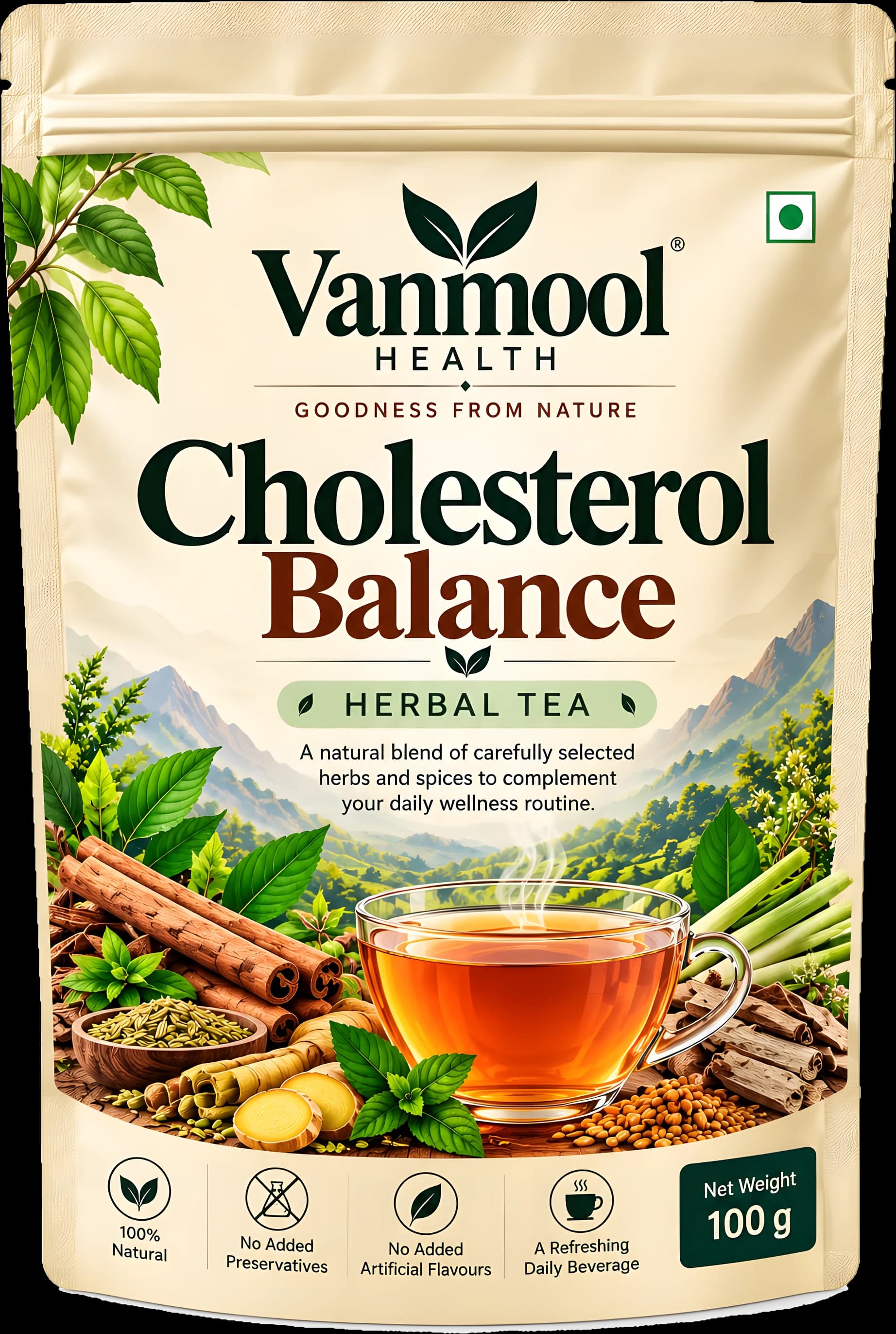
Green tea: Reach for green tea when you want a light, plain cup, in the morning or afternoon, or a simmered blend where it sits among other herbs, as it does in Cholesterol Balance.
Black tea: Reach for black tea for chai, for a strong cup with milk, or for iced tea with lemon, where its body holds up to sugar and ice.
People also ask
01Does green tea have less caffeine than black tea?
Usually about half, cup for cup: roughly 20 to 45 mg against 40 to 70 mg in 200 ml. Both vary with the leaf, how hot the water is and how long it steeps.
02Can I make chai with green tea?
You can simmer green tea, as Kashmiri kahwa does with cinnamon and cardamom, but not with milk and a hard boil; it turns bitter. Chai is made with black CTC tea for a reason.
03Why is green tea bitter and black tea not?
Green tea keeps its fresh catechins, which taste astringent and come out fast in boiling water. Black tea's oxidation converts them into rounder, maltier compounds. Brew green tea cooler and shorter and the bitterness mostly goes.
Sources
All about green tea · यह पेज हिन्दी में
More comparisons
- Green tea / Milk chai
- Herbal tea / Green tea
- Kadha / Herbal tea
- Gud (jaggery) / White sugar
- Stevia leaf / White sugar
- Mishri (rock sugar) / White sugar
- Ceylon cinnamon / Cassia (common dalchini)
- Adrak (fresh ginger) / Sonth (dry ginger)
- Choti elaichi (green cardamom) / Badi elaichi (black cardamom)
- Jeera (cumin) / Shahi jeera (black cumin)
- Methi dana (fenugreek seeds) / Kasuri methi (dried fenugreek leaves)
- Tulsi (holy basil) / Sweet basil (Italian basil)
- Sabja seeds (sweet basil seeds) / Chia seeds
- Kala namak (black salt) / Sendha namak (rock salt)
- Rai (small brown mustard) / Sarson (yellow mustard)
- Dahi (curd) / Yogurt, including Greek yogurt
- Ghee / Butter (makkhan)
- Paneer / Chhena
- Atta (whole wheat flour) / Maida (refined flour)
- Suji (semolina, rava) / Daliya (broken wheat)
- Tej patta (Indian bay leaf) / Bay leaf (Mediterranean bay laurel)
- Kalonji (nigella seeds) / Kala til (black sesame)
- Jaiphal (nutmeg) / Javitri (mace)
- Kesar (saffron) / Kesari rang (orange food colour)
- CTC tea / Orthodox tea (leaf tea)
- Ragi (finger millet) / Jowar and bajra (sorghum and pearl millet)
- Besan (gram flour) / Atta (whole wheat flour)
- Nariyal tel (coconut oil) / Sarson ka tel (mustard oil)
- Brown rice / White rice
- Poha (flattened rice) / Murmura (puffed rice)
These pages compare foods as foods: what they are, how they are made and how they cook. Nothing here says one is healthier or does anything for a condition. If you manage a health condition or take regular medicine, your doctor and dietitian decide what belongs in your kitchen.