Fenugreek (Methi) मेथी दाना
Methi (मेथी दाना) is called Fenugreek seeds in English, Methi dana in Hindi. Its botanical name is Trigonella foenum-graecum. Also searched as: methi dana in english · methi in english language · methi dana tea.
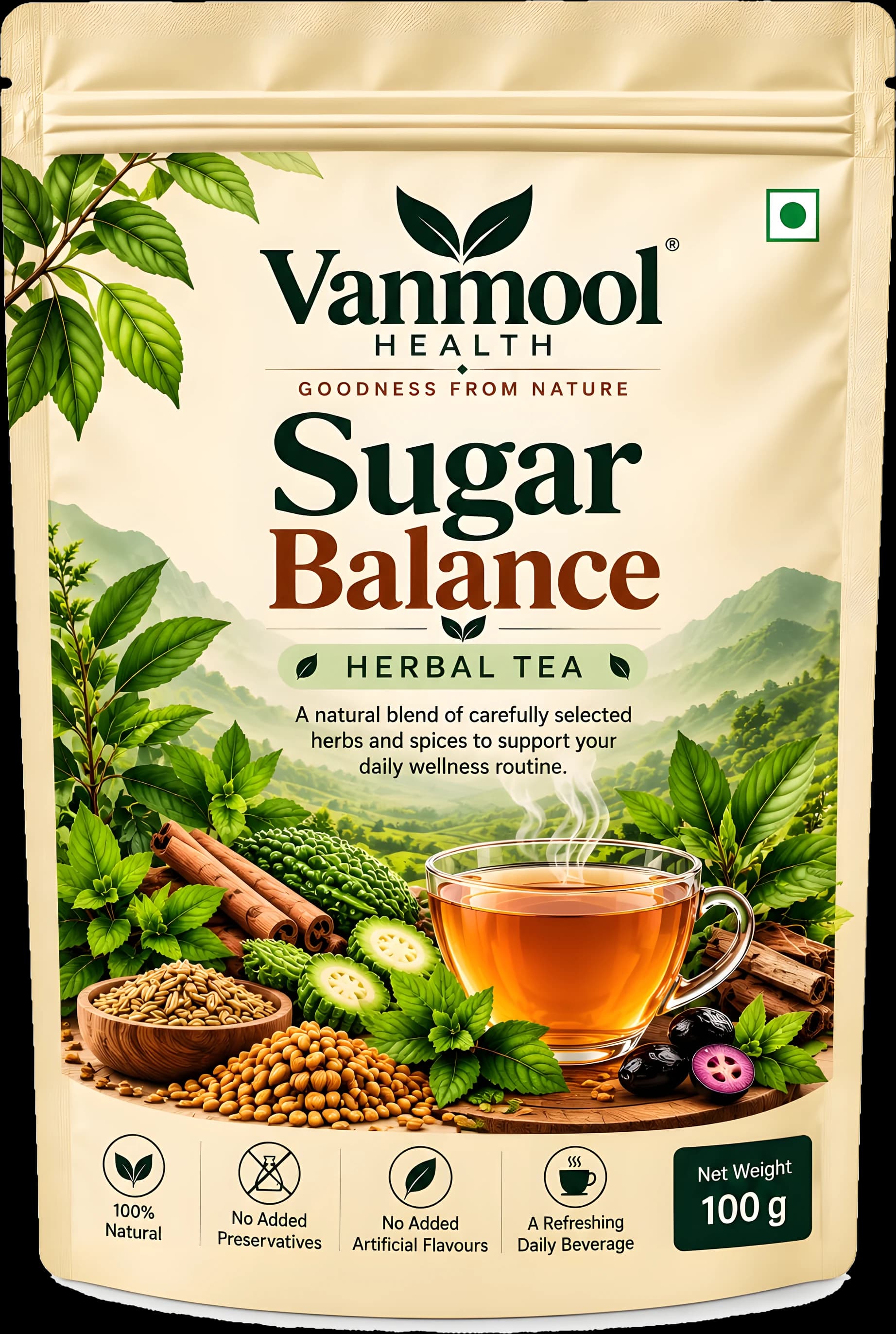
Golden seeds rich in soluble fibre, a staple of sugar-conscious kitchens, in Sugar Balance.
Also called: Methi dana · Methi · Vendhayam (Tamil) · Menthulu (Telugu) · Uluva (Malayalam) · Trigonella foenum-graecum. In English: Fenugreek seeds.
Fenugreek (Trigonella foenum-graecum) is a small, clover-like plant of the bean family, and India grows more of it than any other country, most of it in Rajasthan, with more from Gujarat and Madhya Pradesh. The same plant gives two kitchen staples: the leaves, methi, and the small, hard, golden-yellow seeds, methi dana.
Fenugreek is a winter crop, sown after the monsoon. Grown for leaves, it is cut young; grown for seed, it is left to flower and form long, slender pods, each holding a row of seeds, which are threshed out once the plants have dried. The dried leaves sold as kasuri methi take their name from Kasur, a town in Punjab, now in Pakistan, long famous for them. The botanical name, from the Latin for 'Greek hay', recalls its old use as animal fodder around the Mediterranean.
Raw methi seeds are very bitter, with a nutty depth underneath. Dry-roasted for a minute until a shade darker, they turn toasty and smell faintly of maple syrup or burnt sugar, from a compound called sotolon; roast them too far and they turn harsh. Soaked, the seeds swell and their soluble fibre forms a soft, slippery gel.
Methi dana is a small but constant presence in Indian cooking: a few seeds in the tadka for dal, kadhi and sambar, one of the five seeds in panch phoron, a key note in mango and lime pickles, a pinch in idli and dosa batter, and the base of the methi laddoos made in winter and for new mothers. Many families drink methi water, seeds soaked overnight, first thing in the morning. The leaves go into parathas, thepla, aloo methi and methi malai.
Seeds are slow to give up their flavour, so fenugreek needs the covered five to seven minutes on the flame that the Sugar Balance pack asks for. In the cup it adds a nutty, gently bitter depth and a little body from its soluble fibre. It is potent, so a small share in a blend is plenty; and if you also drink methi water in the morning, a second helping of the same seed later in the day is a lot.
Whole fenugreek seeds are among the longest-keeping spices; in a sealed, dry jar they hold their character for a year or more. Ground methi fades faster and clumps in humid weather. Because methi is a legume, people allergic to peanuts or chickpeas occasionally react to it as well.
What has been studied about fenugreek
Fenugreek seed is one of the most researched kitchen spices. It has been studied for its effect on blood sugar and cholesterol, mostly in small, short trials using seed powder or extracts in doses of several grams a day, far more than the pinch that goes into a cup. The soluble fibre in the seed, which forms a gel when soaked, is the part most of these studies point to. The results are mixed, and reviews of the research describe the evidence as limited and the trials as small and of uneven quality.
It has also been studied, again in small trials, for milk supply in breastfeeding mothers, for menstrual pain and for appetite. None of these uses is established, and the US National Center for Complementary and Integrative Health describes the evidence as insufficient to say whether fenugreek is helpful for any condition.
Methi dana in a blend is a food, the same seed that goes into dal and pickles, and is there for its nutty, bitter depth and a little body from its fibre. It does not treat anything, and a cup of it is not a substitute for medicine or for a doctor's advice.
Side effects, and who should be careful
Fenugreek is traditionally linked with blood sugar, so anyone taking medicine for diabetes must talk to their doctor before using it regularly in any quantity, because of the risk of the sugar going too low when herb and medicine push the same way. It may also affect how blood-thinning medicines such as warfarin work, so people on those should ask too.
The commonest side effects are gas, bloating and loose stools, especially in the larger amounts used in trials, and a maple-syrup smell in the sweat and urine, which is harmless but can alarm people; in breastfed babies it has occasionally been mistaken for a metabolic disorder. Because methi is a legume, people allergic to peanuts or chickpeas sometimes react to it as well.
Larger amounts of fenugreek are not advised in pregnancy: the seed has traditionally been used to bring on labour. The pinch in a dish of food is normal, but anyone pregnant should ask their doctor before drinking a methi-heavy tea daily. Children should not be given fenugreek drinks or supplements.
How to use it
Methi dana is everywhere in Indian cooking: a few seeds in the tadka for dal, kadhi and sambar, in panch phoron, in mango and lime pickles, in dosa batter, and in the methi laddoos made in winter. Many families keep a jar of soaked seeds for 'methi water', drunk first thing in the morning, and the softened seeds are eaten or added to curd.
For methi water, soak one teaspoon of seeds overnight in a glass of water and drink the water in the morning. For a hot cup, lightly crush half a teaspoon of seeds, add them to 200 ml of water, bring to a gentle boil, cover and simmer on a low flame for five to seven minutes. Dry-roasting the seeds for a minute first makes the cup toasty and less bitter; roast too far and it turns harsh.
Seeds are slow to give up their flavour, which is why fenugreek needs the full covered simmer the Sugar Balance pack asks for rather than a quick steep. It is potent: a small share in a blend is plenty, and if you drink methi water in the morning as well, be aware that the two together add up.
Questions people ask
01What is methi dana called in English?
Fenugreek seeds. The plant is Trigonella foenum-graecum, 'Greek hay', and its leaves are fenugreek leaves, methi.
02Can I drink methi water every day?
Many people do, with a teaspoon of seeds soaked overnight. Anyone taking diabetes medicines, anyone pregnant, and anyone who gets stomach upset from it should check with their doctor first.
03Is fenugreek safe with diabetes medicines?
Only with your doctor's knowledge. Fenugreek is traditionally linked with blood sugar, and combined with medicine there is a risk of sugar dropping too low.
04What are the side effects of fenugreek?
Gas, bloating and loose stools in larger amounts, and a harmless maple-syrup smell in sweat and urine. People allergic to peanuts or chickpeas may react to it.
05Is fenugreek safe in pregnancy?
The small amounts in cooked food are normal. Larger amounts, such as a strong daily tea or supplements, are not advised, because the seed has traditionally been used to bring on labour. Ask your doctor.
06What are fenugreek seeds called in Hindi?
Methi dana (मेथी दाना). The botanical name is Trigonella foenum-graecum. Other Indian names: Methi dana, Methi, Vendhayam (Tamil), Menthulu (Telugu), Uluva (Malayalam), Trigonella foenum-graecum.
Sources
Making it at home, on its own
Soak one teaspoon of methi (fenugreek) seeds in a glass of water overnight and drink the water in the morning; the seeds can be chewed or dropped into a sabzi. For a quicker cup, simmer the same teaspoon in 250 ml of water for three to five minutes and strain. Step by step: methi water, two ways
Fenugreek seeds in Hindi and other Indian languages, and how to spot it in a shop
1 teaspoon of fenugreek seeds weighs about 3.7 g: spoon to grams
With medicines, in pregnancy, for children
What is documented for fenugreek alongside each common kind of medicine, one page per pair.
- Thyroid · Fine, with a habit to keep
- Diabetes · Tell your doctor before it becomes daily
- Blood thinners · Tell your doctor before it becomes daily
- Blood pressure · No documented concern at a cup a day
- Statins · No documented concern at a cup a day
- Pregnancy · Tell your doctor before it becomes daily
- Children · No documented concern at a cup a day
Read more: Morning drinks for diabetics: methi water, jamun and more; Herbal tea in pregnancy: what is known, and what is not; Herbal tea before surgery: what to stop, and when; Cinnamon, gudmar and methi with metformin: what to know; Prediabetes: what it means and what to change first; Diabetes diet in India: what to eat, plate by plate; How to lower cholesterol naturally: what works and what doesn't; Methi tea: recipe, benefits, side effects and methi water; Cinnamon, fenugreek and the after-meal cup; Jamun seed powder: uses, how to take it, side effects; Tea for diabetics: what to drink and how to make it
Vanmool infusions are food products, not medicines. They are not intended to diagnose, treat, cure or prevent any disease. If you are pregnant, nursing, taking medication or managing a medical condition, please speak to your doctor before use.