· 5 min read
Herbal tea and cholesterol: what a cup can and cannot do
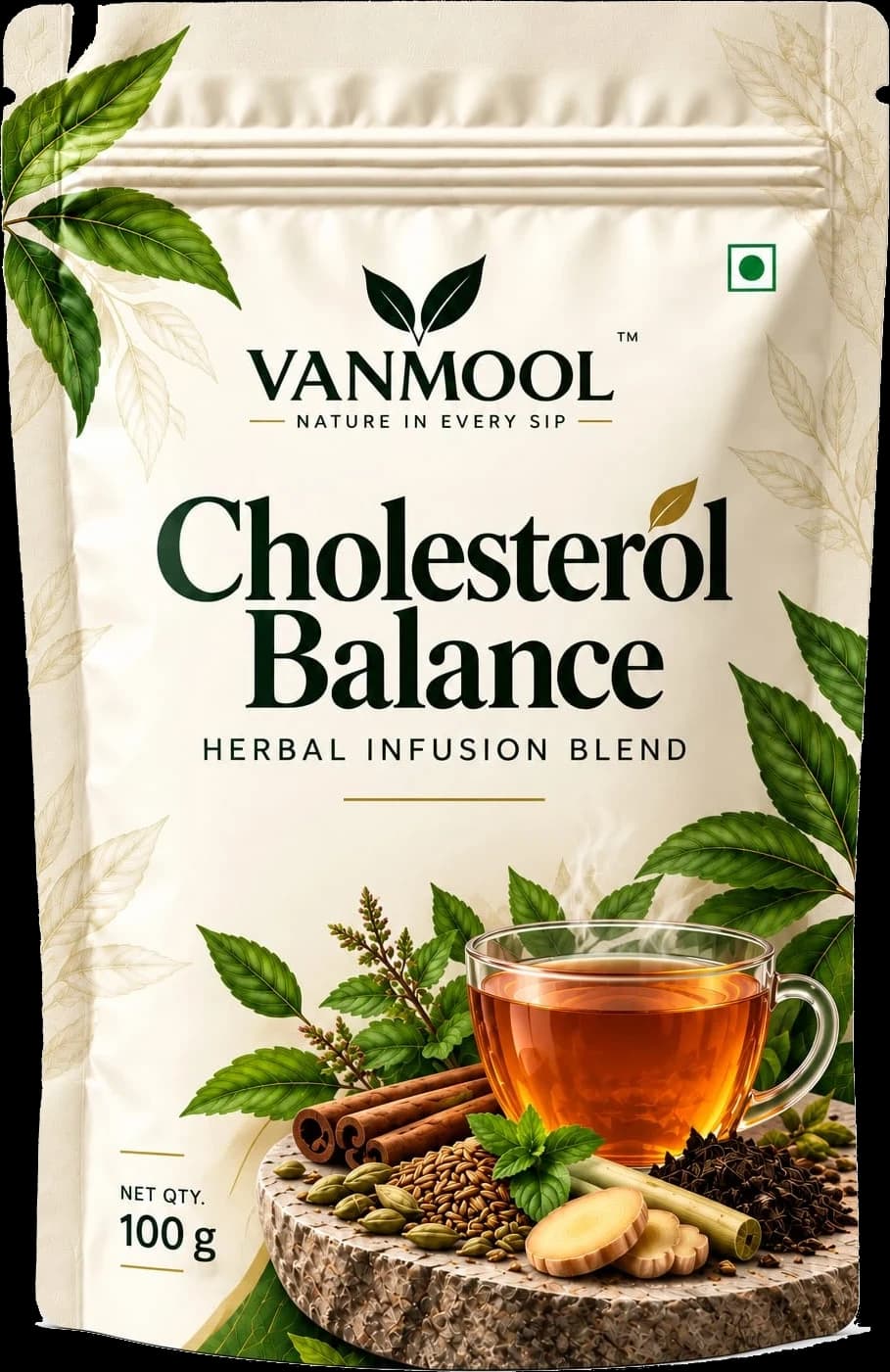
Search for 'tea for cholesterol' and you will find a lot of promises. This is not one of them. It is a plain account of what a daily herbal cup can reasonably be part of, and what it cannot do on its own.
01 Start with what cholesterol actually responds to
The things with the strongest evidence for healthier cholesterol levels are not exotic: soluble fibre from oats, dals and vegetables; replacing some saturated fat with unsaturated fat; regular movement; not smoking; and, where a doctor prescribes it, medication. Any honest conversation about tea has to start there.
A herbal infusion fits into that picture as a habit, not a treatment. It is a warm, sugar-free drink taken at a moment in the day when many people would otherwise reach for something sweet or fried. That swap is where most of its value lives.
02 What the research on common herbs shows
Cinnamon, fenugreek and ginger have all been studied for their effect on blood lipids. Results are mixed. Some small trials report modest reductions in LDL or triglycerides; others report no significant change. The studies often use concentrated extracts or large daily doses, not a teaspoon of blended herbs in hot water.
So the fair summary is this: these herbs are safe for most people as food, they have a long history of use around meals in Indian homes, and they may contribute a small amount. They are not a substitute for diet, movement or prescribed medicine, and nobody should stop a statin because they have started a tea.
03 How to make the cup count
Drink it at the same point every day, ideally after your largest meal, so it becomes automatic. Do not add sugar or honey; the whole point is a sweet-tasting cup without them, which cinnamon and fennel provide naturally. Use whole or cut herbs rather than powders, because you can see what you are drinking and the flavour is cleaner.
Keep your regular check-ups. If you are tracking cholesterol, the only way to know what is working is a lipid profile from your doctor, not how you feel after a cup.
Herbs in this piece: Cinnamon, Fennel Seed, Ginger
Vanmool infusions are food products, not medicines. They are not intended to diagnose, treat, cure or prevent any disease. If you are pregnant, nursing, taking medication or managing a medical condition, please speak to your doctor before use.