· 6 min read
Caffeine-free tea in India: what to drink at night
इस लेख को हिन्दी में पढ़ें: बिना कैफ़ीन वाली चाय: रात को कौन सी हर्बल चाय पिएँ
In short
Herbal teas made from tulsi, fennel, mint, ginger, cinnamon, lemongrass, cardamom or chamomile are naturally caffeine-free; anything containing tea leaf, green or black, is not. So the one check that matters is the ingredient list: if it names green tea, black tea, tea leaf or Camellia sinensis, the cup contains caffeine.
Herbal teas made from tulsi, fennel, mint, ginger, cinnamon, lemongrass, cardamom or chamomile are naturally caffeine-free; anything containing tea leaf, green or black, is not. So finding a caffeine-free tea in India comes down to one check: is there tea leaf (Camellia sinensis) in the ingredient list? Here is how to read it, and how to build a calm evening cup.
01 Which herbs contain caffeine, and which do not
Caffeine occurs naturally in only a handful of plants that people drink: the tea plant (which gives black, green, white and oolong tea), coffee, cocoa, and a few South American plants such as yerba mate and guarana. Of these, only tea and coffee are common in Indian kitchens.
Almost every other herb used in Indian infusions has none. Tulsi, mint, ginger, cinnamon, cardamom, fennel, lemongrass, mulethi, methi, ajwain, hibiscus, chamomile, rose petals and saunf are all caffeine-free. A kadha made only from spices and herbs, with no tea leaf, is caffeine-free too.
That is the simple rule: if it is not from the tea plant, coffee or cocoa, it almost certainly contains no caffeine.
It is also why so many Indian households already drink caffeine-free cups without calling them that. Saunf water after lunch, ajwain water for a heavy stomach, ginger and tulsi simmered during the monsoon, haldi in warm milk at night: none of these has a trace of caffeine, and none needed a label to say so.
02 Green tea, decaf and 'mostly herbal' blends
Green tea is often sold alongside herbal teas and is sometimes described as one, but it comes from the same plant as black tea and does contain caffeine. A cup usually has less than a cup of coffee or a strong masala chai, but it is not zero.
Decaffeinated tea has had most of its caffeine removed, not all of it. And many blends sold as 'herbal' or 'wellness' teas contain some green or black tea leaf for body, which is perfectly fine during the day but worth knowing about at night. The word 'herbal' on the front does not guarantee anything; the ingredient list does.
03 How to check caffeine-free tea brands in India
Turn the pack over and look for any of these words in the ingredient list: 'green tea', 'black tea', 'tea leaf', 'Camellia sinensis', 'matcha', 'coffee', 'cocoa' or 'guarana'. If none appears, the blend is caffeine-free. Many caffeine free tea brands in India say so on the front, but check the back anyway, because front-of-pack wording is marketing and the ingredient list is regulated.
If a pack lists 'natural flavours' or 'herbal extracts' without naming them, you cannot be sure, and it is reasonable to ask the seller.
04 Herbal tea at night, and Ayurvedic tea for sleep
An evening cup works partly because of what it is not: no caffeine, no sugar, and not a screen. A warm, quiet drink after dinner is a signal to wind down, and that ritual is a large part of its value.
Several herbs are traditionally taken in the evening in Indian homes. Fennel and cardamom are classic after-meal spices. Tulsi is a calm, aromatic leaf in many Ayurvedic blends. Chamomile, though not Ayurvedic, is the best-known bedtime herb worldwide and has been studied for sleep, with modest and mixed results. Ashwagandha is often called an Ayurvedic herb for sleep and has been studied in small trials, but it is a stronger herb usually taken as a powder, and it is not suitable for everyone.
None of these is a sleeping pill. If you struggle with sleep for weeks at a time, that is worth a conversation with a doctor rather than a stronger tea.
05 How to make a calm evening cup
A simple homemade version: boil 200 ml of water, add half a teaspoon of fennel seeds, one lightly crushed cardamom pod and five or six fresh tulsi leaves (or a pinch of dried tulsi), cover and simmer on a low flame for five minutes, then strain. No sugar needed; the fennel brings its own sweetness.
Drink it about an hour before bed rather than right at bedtime, so you are not woken by a trip to the bathroom. Keep your last caffeinated cup, including green tea, to the early afternoon if you find caffeine affects your sleep; caffeine can stay in the body for several hours.
Two other easy variations. For a lighter cup, simmer a 5 cm piece of lemongrass and a thin slice of ginger in 200 ml of water for four minutes. For something warmer in winter, use a small piece of cinnamon and a crushed cardamom pod instead. If you prefer a ready blend, check the ingredient list for tea leaf first, then make it as the pack says, usually 2 g simmered for five to seven minutes.
06 Who should be careful
Caffeine-free does not mean free of effects. Mulethi can raise blood pressure in large amounts. Some herbs used for sleep, such as ashwagandha, can interact with sedatives, thyroid and other medicines and are not advised in pregnancy. Chamomile can cause reactions in people allergic to plants in the daisy family.
If you are pregnant or breastfeeding, take regular medicine, or manage a condition such as diabetes, high blood pressure or a thyroid disorder, ask your doctor before making any herbal tea a nightly habit.
07 Our two blends: one with caffeine, one without
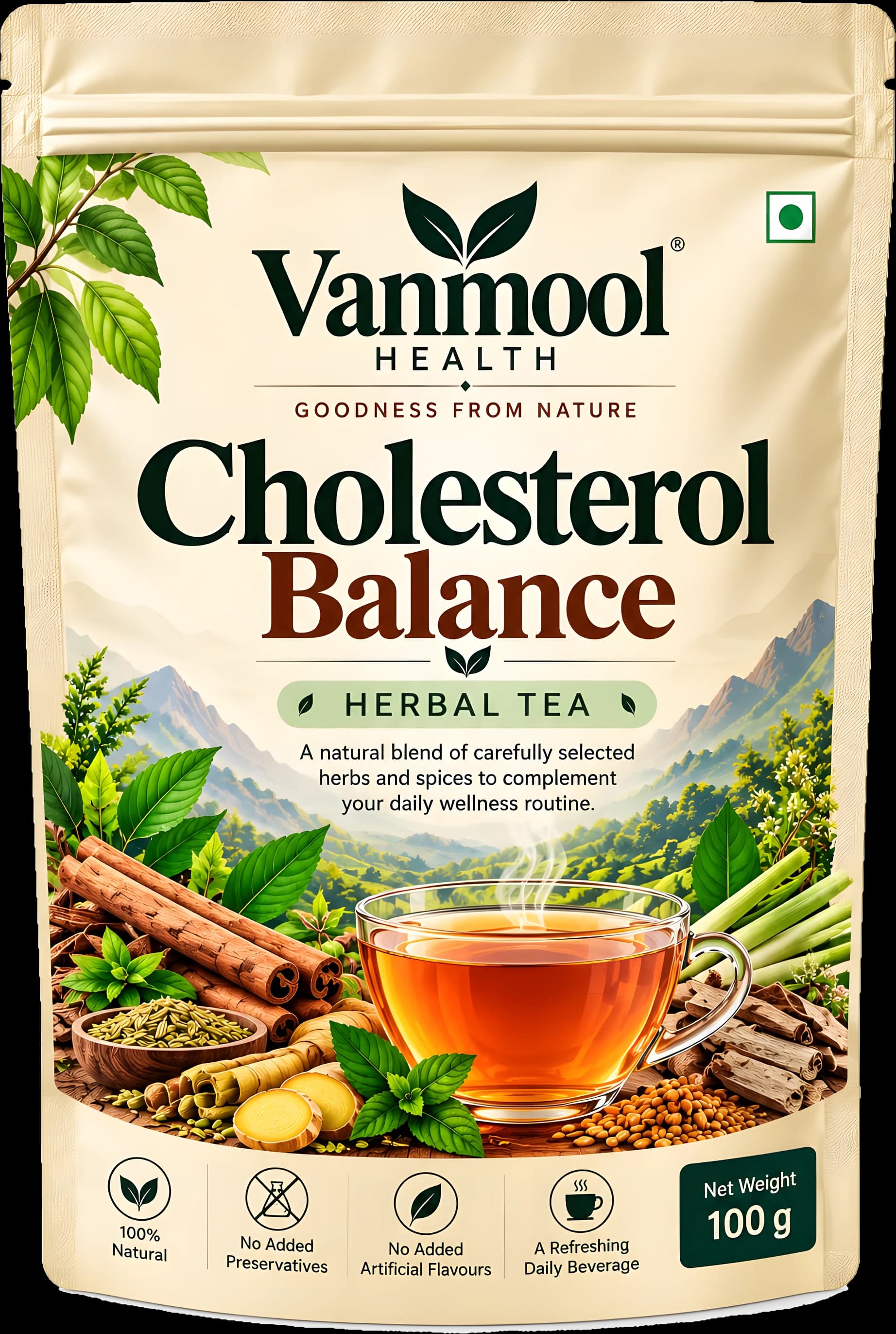
Of Vanmool's two blends, Sugar Balance is caffeine-free: all twelve of its herbs and spices, from cinnamon and fennel to tulsi and cardamom, contain none. Cholesterol Balance is not, because its first ingredient is green tea leaf, so we suggest it earlier in the day and Sugar Balance for the evening cup.
Herbs in this piece: Fennel, Tulsi (Basil), Cardamom, Green Tea Leaf
People also ask
01Does green tea have caffeine?
Yes. Green tea comes from the same plant as black tea and does contain caffeine. A cup usually has less than a cup of coffee or a strong masala chai, but it is not zero, and even decaffeinated tea keeps a little. Keep it earlier in the day if caffeine affects your sleep.
02What is a good herbal tea to drink at night?
Simmer half a teaspoon of fennel seeds, one crushed cardamom pod and five or six tulsi leaves in 200 ml of water, covered, for five minutes, then strain. Drink it about an hour before bed. It is a calming ritual, not a sleeping pill; ongoing sleep trouble needs a doctor.
03Is kadha caffeine-free?
Yes, a kadha made only from spices and herbs, with no tea leaf, is caffeine-free, since tulsi, ginger, cinnamon, cardamom, mulethi, ajwain and saunf contain none. Caffeine-free is not effect-free, though: mulethi can raise blood pressure in large amounts, so ask your doctor if you take regular medicine.
Sources
Elsewhere on this site
- How much caffeine is in the cup? · Compare
- Saunf water, soaked or boiled · How to make
- Tulsi kadha, the household way · How to make
- Elaichi tea, with or without milk · How to make
- Green tea that is not bitter · How to make
- Herbal tea and green tea: one of them has no tea in it · Compare
Related reading
Vanmool infusions are food products, not medicines. They are not intended to diagnose, treat, cure or prevent any disease. If you are pregnant, nursing, taking medication or managing a medical condition, please speak to your doctor before use.