Cardamom छोटी इलायची
Elaichi (छोटी इलायची) is called Green cardamom in English, Chhoti elaichi in Hindi. Its botanical name is Elettaria cardamomum. Also searched as: choti elaichi in english · small elaichi in english · green elaichi · elaichi green tea.
Small green cardamom, the most fragrant spice in the kitchen, in both blends.
Also called: Chhoti elaichi · Hari elaichi · Ela (Sanskrit) · Elakkai (Tamil) · Elakka (Malayalam) · Yelakki (Kannada). In English: Green cardamom.
Small green cardamom (Elettaria cardamomum) is the dried seed pod of a tall, leafy plant of the ginger family, native to the evergreen forests of the Western Ghats. Kerala grows most of India's crop, much of it in the hills of Idukki district, with more from Karnataka and Tamil Nadu. A range of hills along the Kerala and Tamil Nadu border is called the Cardamom Hills after it.
The plant grows best in shade, under taller forest trees, at roughly 600 to 1,500 metres, with plenty of rain. Its flowers appear on runners that creep along the ground, and the pods ripen unevenly, so they are picked by hand, a few at a time, every few weeks through the season. The fresh pods are then cured, dried with gentle, controlled heat over a day or so, which keeps them green; pods dried in the open sun turn pale.
The aroma lives in the small, sticky black seeds inside the pod: floral, sweet and cool, with a hint of eucalyptus from a compound called cineole. The green husk carries much less. Large black cardamom, the smoky pod used in north Indian rice and meat dishes, comes from a different plant altogether and tastes nothing like it.
Cardamom is the spice most Indians would name for sweetness and celebration: in kheer, halwa, barfi, payasam and shrikhand, in chai, and in biryani. A pod or two chewed after a meal is an old habit, and cardamom is a mainstay of the mukhwas bowl alongside fennel. It is also one of the most expensive spices by weight, after saffron and vanilla, and is traded by grade: the boldest, greenest pods fetch the highest prices.
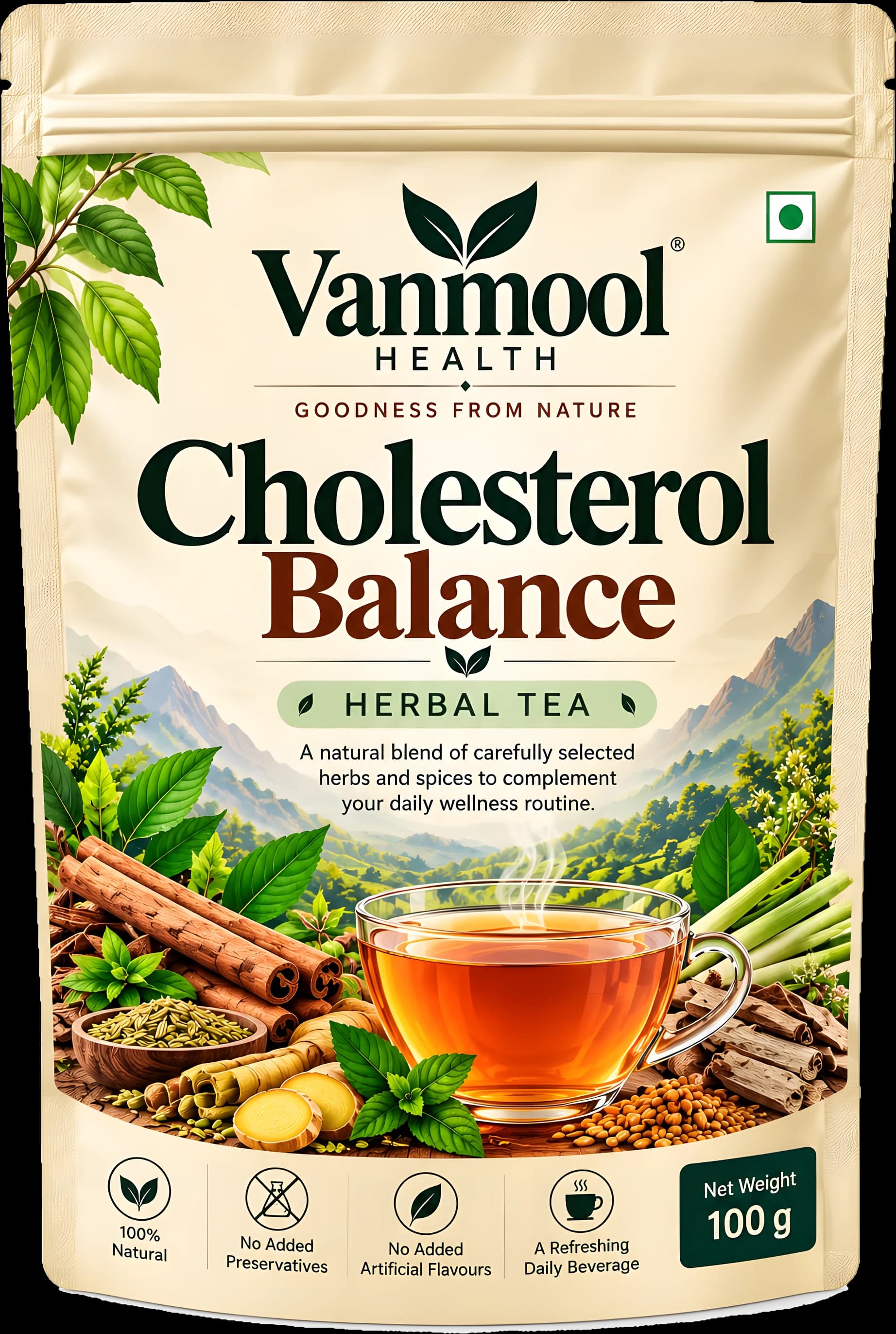
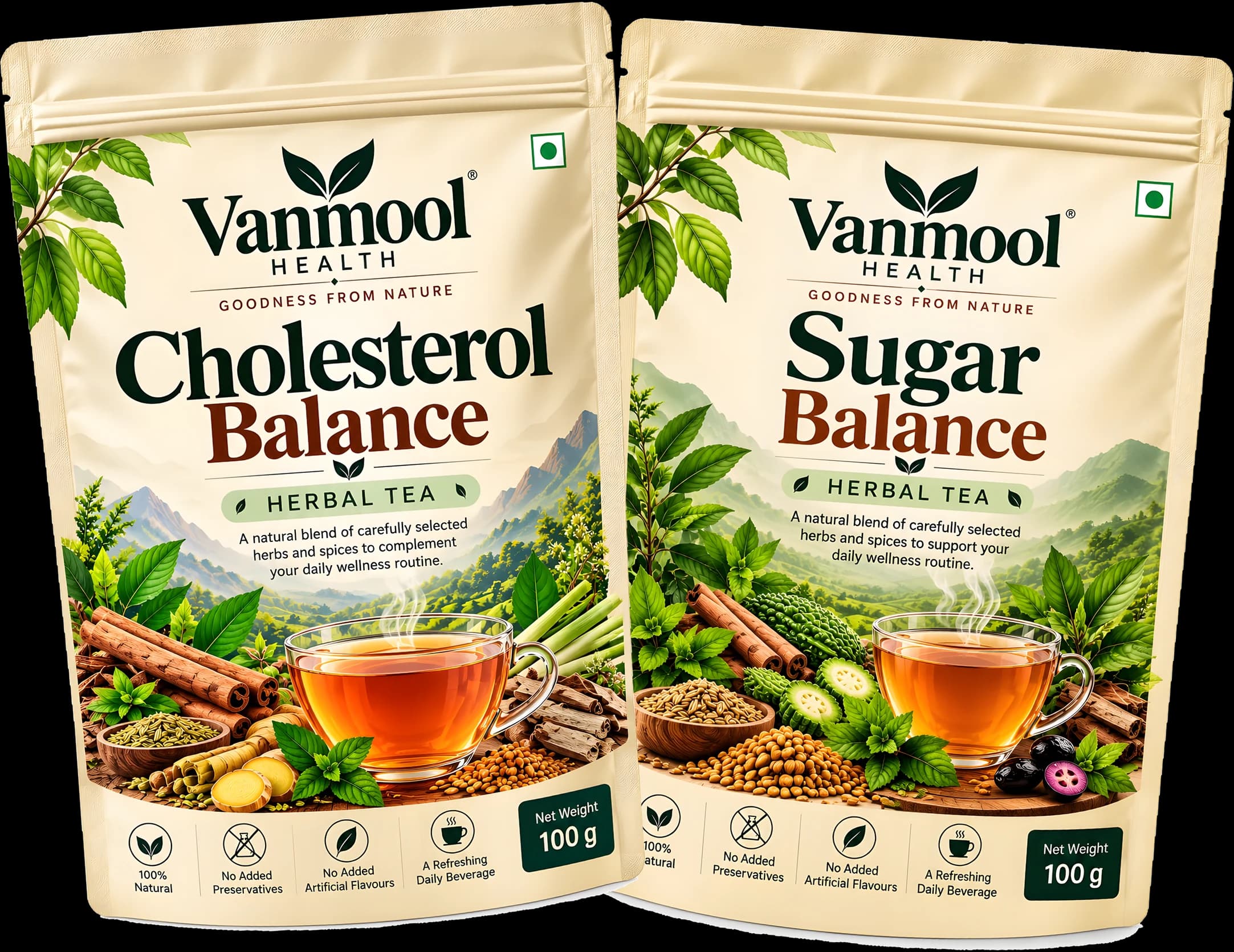
It is printed as small cardamom on the Cholesterol Balance pack and green cardamom on Sugar Balance; it is the same spice, and in both it lifts the heavier notes of bark, root and seed. Its fragrance is volatile, so it rewards a lid: in a covered pan the seeds release their oils into the water rather than the air, and cardamom is what you smell first when you lift the lid.
Whole pods protect their seeds and keep their scent for a year or more in a sealed jar. Once ground, cardamom fades within weeks, which is why careful cooks buy pods and crush them as they need them. Good pods are plump, evenly green and fragrant when pressed; pale, shrivelled or hollow-feeling pods are old.
What has been studied about cardamom
For a spice so widely used, cardamom has had little research in people. A few small trials, mostly in India, have given cardamom powder in capsules for several weeks and looked at blood pressure, cholesterol and markers of inflammation; laboratory work has studied its essential oil, rich in cineole and terpinyl acetate, against bacteria and in cells. The trials are small and few, and reviews describe the evidence as preliminary.
Its long history is as a flavour and an after-meal mouth freshener, and that is still the honest description. Cardamom in a Vanmool blend is there for its fragrance and for the way it lifts the heavier notes of bark, root and seed. It does not treat, prevent or lower anything.
Side effects, and who should be careful
Cardamom is generally well tolerated in kitchen amounts, and most Indians eat it in some form most days. Allergy is rare but has been reported, usually in people who also react to other spices of the ginger family. Chewing a great many pods can irritate the mouth.
One traditional caution appears in several European herbal references: people with gallstones are advised to avoid cardamom in medicinal amounts, because it may stimulate the gallbladder. A pod in a cup is not a medicinal amount, but if you have gallstones, ask your doctor. Because a few studies have looked at it in connection with blood pressure, anyone on blood pressure medicines who wants to take cardamom in large daily doses should also ask first.
In food and tea amounts cardamom is considered fine in pregnancy, while breastfeeding and for children; concentrated cardamom supplements or oil are a different matter and should be used only with a doctor's advice.
How to use it
Cardamom is the spice of Indian sweetness and celebration: in kheer, halwa, barfi, payasam and shrikhand, in chai and biryani, and chewed after a meal. It is the pod most likely to be dropped into the chai pan after ginger, and a mainstay of the mukhwas bowl alongside fennel. Its fragrance lives in the small black seeds; the green husk carries much less.
For a simple cup, crush two or three pods lightly, husk and all, for a cup and a half of water. Bring to the boil, lower the flame, cover, and simmer for five minutes, then strain. Whole, uncrushed pods give very little; a pod split open gives most of what it has. A piece of cinnamon or a few fennel seeds alongside make a natural pairing, and it is good in warm milk.
Its aroma is volatile, so cardamom rewards a lid more than almost any other spice. In a covered simmer the seeds release their oils into the water rather than the kitchen, and cardamom is what you smell first when the lid comes off. In an open pan most of it is gone by the time the cup is poured.
Questions people ask
01What is elaichi called in English?
Cardamom. Chhoti or hari elaichi is small green cardamom, Elettaria cardamomum; badi elaichi, large black cardamom, is a different plant with a smoky taste.
02Can I have cardamom every day?
Yes, in kitchen amounts; most Indians do. It is a flavour, not a treatment. Only people considering it in large daily doses, or with gallstones, need to ask a doctor.
03What are the side effects of cardamom?
Very few at kitchen amounts. Allergy is rare, and chewing many pods can irritate the mouth. People with gallstones are traditionally advised to avoid medicinal amounts.
04Is cardamom safe in pregnancy?
In food and tea amounts, yes; it is in most Indian sweets and chai. Avoid concentrated cardamom supplements or oil unless a doctor advises.
05Should cardamom be crushed before use?
Yes, lightly. The flavour is in the seeds, and a whole sealed pod gives very little in a short simmer. Crush it, husk and all, just before it goes in.
06What is green cardamom called in Hindi?
Chhoti elaichi (छोटी इलायची). The botanical name is Elettaria cardamomum. Other Indian names: Chhoti elaichi, Hari elaichi, Ela (Sanskrit), Elakkai (Tamil), Elakka (Malayalam), Yelakki (Kannada).
Sources
Making it at home, on its own
Crush two green cardamom pods, shell and all, and boil them for three to four minutes in 200 ml of water. For elaichi chai, add a teaspoon of tea leaves and 100 ml of milk at that point and boil two minutes more; for a plain cardamom infusion, strain and drink the water as it is. Step by step: elaichi tea, with or without milk
Green cardamom in Hindi and other Indian languages, and how to spot it in a shop
1 teaspoon of cardamom powder weighs about 2 g: spoon to grams
With medicines, in pregnancy, for children
What is documented for cardamom alongside each common kind of medicine, one page per pair.
- Thyroid · Fine, with a habit to keep
- Diabetes · No documented concern at a cup a day
- Blood thinners · No documented concern at a cup a day
- Blood pressure · No documented concern at a cup a day
- Statins · No documented concern at a cup a day
- Pregnancy · No documented concern at a cup a day
- Children · No documented concern at a cup a day
Read more: Sardi ka kadha: a north Indian winter guide to the daily cup; Elaichi (green cardamom): what it is, uses and how to brew it; Foods to avoid with high cholesterol: an Indian kitchen guide; Arjuna tea: arjun ki chhal benefits, uses and side effects; Tulsi tea: benefits, an easy recipe and pregnancy advice; How to make herbal tea at home: boil, simmer, strain; Cinnamon tea for diabetes: what dalchini can and cannot do; Caffeine-free tea in India: what to drink at night; Cardamom, from the Cardamom Hills
Vanmool infusions are food products, not medicines. They are not intended to diagnose, treat, cure or prevent any disease. If you are pregnant, nursing, taking medication or managing a medical condition, please speak to your doctor before use.