· 6 min read
Herbal tea for cholesterol: what the research says
इस लेख को हिन्दी में पढ़ें: कोलेस्ट्रॉल के लिए हर्बल चाय: शोध क्या कहता है और क्या नहीं
In short
No herbal tea can replace diet, activity or prescribed medicine for cholesterol. Green tea is the most studied, with modest and mixed results on blood lipids, and arjuna, cinnamon and ginger have smaller, mixed evidence. The best choice is an unsweetened cup you will actually drink every day, alongside the basics and your doctor's advice.
No herbal tea can replace diet, activity or prescribed medicine for cholesterol, but a few herbs, green tea most of all, have been studied for their effect on blood lipids, with modest and mixed results. So the best herbal tea for cholesterol is one that fits a routine you will keep: unsweetened, daily, and alongside the basics. Here is what is known, herb by herb.
01 Lifestyle first: what LDL and triglycerides respond to
A lipid profile measures several things. LDL is the cholesterol doctors most want lower; HDL is the kind they are glad to see higher; triglycerides are fats in the blood that rise with excess calories. They respond to different things, and none of them responds mainly to tea.
The habits with the strongest evidence are familiar: more soluble fibre from oats, dals, beans, vegetables and fruit; less saturated and trans fat, which in Indian kitchens often means less vanaspati, deep frying and bakery snacks; regular physical activity; not smoking; and keeping a healthy weight. Triglycerides in particular tend to respond to cutting back on sugar, sweet drinks, refined flour and alcohol.
Where a doctor prescribes medication such as a statin, that is based on your overall heart risk, not just a number. A tea is a habit that sits next to all of this.
That is also where a cup earns its place. A warm, unsweetened drink taken at the moment of the day when many people would otherwise reach for something sweet or fried is a small swap, and small swaps repeated every day are what the basics are made of.
02 Green tea: the most studied cup
Green tea contains catechins, a group of plant compounds that researchers have looked at closely. Reviews that pool several trials have reported small reductions in LDL cholesterol in some groups, mostly with green tea extracts or several cups a day over weeks. Effects on HDL and triglycerides have been less consistent.
That is encouraging but modest, and the trials vary in dose, duration and who took part. Green tea also contains caffeine, which is worth knowing if you drink it late or are sensitive to it. Green tea extract supplements, as opposed to the brewed drink, have been linked in rare cases to liver problems, which is one more reason to prefer an ordinary cup.
03 Arjuna, cinnamon and ginger: the Ayurvedic tea for cholesterol
Arjuna bark (Terminalia arjuna) has been used in Ayurveda for centuries, traditionally simmered in milk or water, and is the herb most often found in an Ayurvedic tea for cholesterol. A number of small studies, mostly from India, have looked at arjuna bark preparations and blood lipids. They are short and often use powdered bark or extracts rather than a tea, so they are a reason for interest, not a conclusion.
Cinnamon, fenugreek and ginger have also been studied for their effect on lipids, with mixed results: some small trials report modest changes in LDL or triglycerides, others none, and many used concentrated extracts or large daily doses rather than a teaspoon of herbs in hot water. Garlic, more of a food than a tea herb, has been studied extensively too, with reviews suggesting at most a small effect. Use it generously in cooking if you like it, but do not expect miracles from it either.
The fair summary for all of them: safe for most people as food, a long history of use, and possibly a small contribution to a routine built on the basics.
04 Tea for cholesterol and high blood pressure
High cholesterol and high blood pressure often travel together, and many people look for one cup that suits both. Hibiscus has been studied for blood pressure, with some small trials reporting modest changes. Unsweetened green tea and spice infusions are reasonable choices for most people.
Two cautions. Mulethi (liquorice root) is common in sweet-tasting herbal blends and can raise blood pressure when taken in large amounts, so check the ingredient list if your pressure is high. And caffeine can cause a short rise in blood pressure in some people. For blood pressure, salt, weight, activity, alcohol and medicines prescribed by your doctor matter far more than any tea.
05 How to make and drink it
For a whole-herb blend: boil 200 ml of water for about a minute, add 2 g (about one small teaspoon), cover and simmer on a low flame for five to seven minutes, then strain. Bark and seeds need this simmer to give up their character; a quick dip is not enough.
For plain green tea: let boiled water cool for a minute or two, then steep one teaspoon of leaf or one bag in 200 ml for two to three minutes. Hotter water and longer steeping make it bitter.
Keep it unsweetened, or add only a little jaggery if you truly need it, since sugar works against triglycerides. One or two cups a day, at a fixed time such as mid-morning or after lunch, is easy to sustain. If the tea contains green tea, finish your last cup by late afternoon if caffeine affects your sleep. Get a repeat lipid profile when your doctor advises; that, not how you feel, tells you what is working.
06 Who should be careful
Talk to your doctor before drinking any herbal tea daily if you take statins or other cholesterol medicine, blood pressure tablets, heart medicines, or a blood thinner. Green tea, ginger and arjuna are all worth mentioning to them, because herbs can interact with some medicines. Cassia cinnamon, the common kind in India, contains coumarin, which in large daily amounts may affect the liver.
The same goes for anyone who is pregnant, breastfeeding, has liver or kidney disease, or has a heart condition. Never stop or reduce prescribed medicine because you have started a tea.
07 Where Cholesterol Balance fits
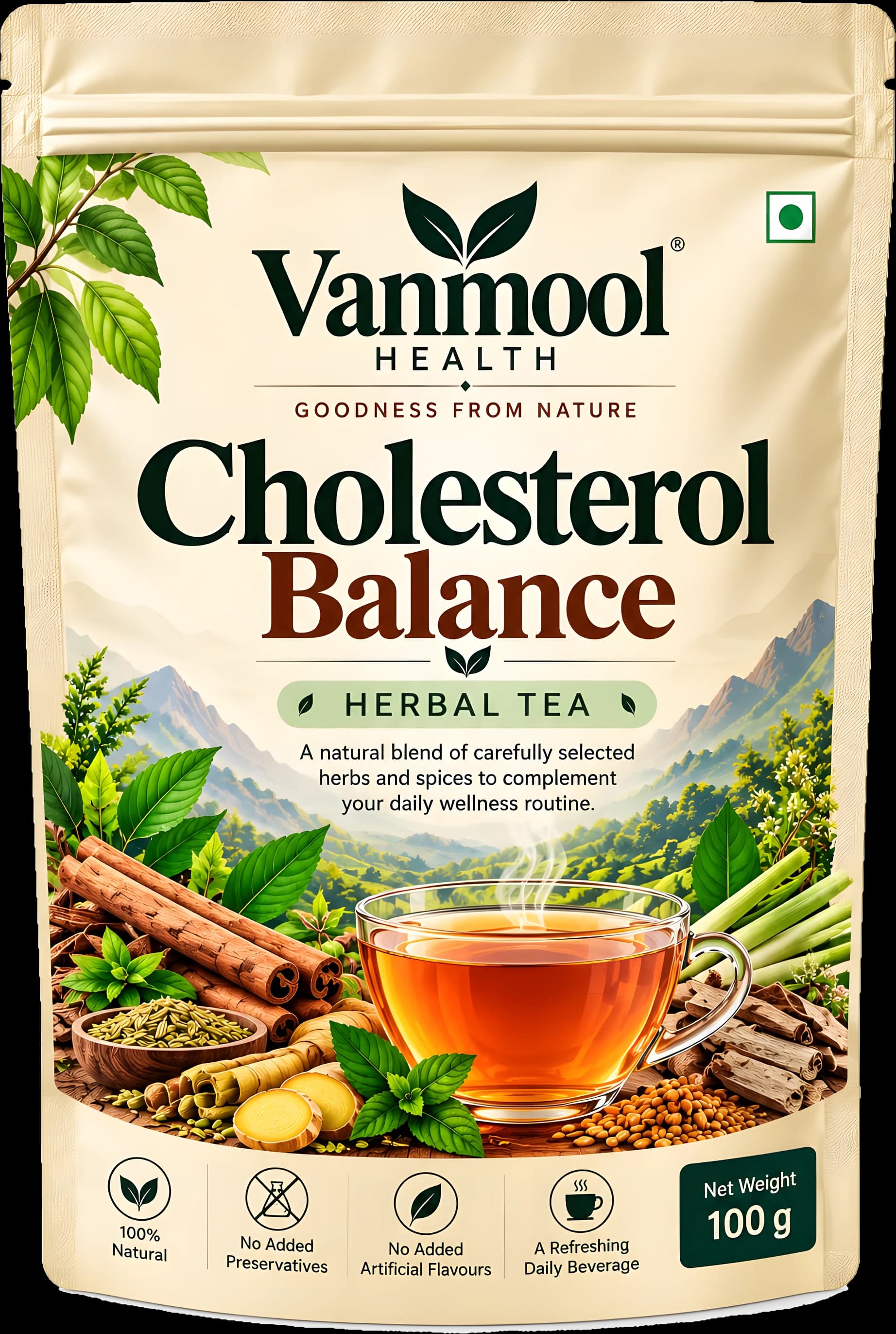
Our Cholesterol Balance blend brings together green tea leaf, mint, tulsi, arjuna bark, dry ginger, cinnamon, cardamom and fennel, simmered for five to seven minutes. It is meant as an unsweetened daily cup alongside your diet, activity and your doctor's advice, nothing more.
Herbs in this piece: Green Tea Leaf, Arjuna Bark, Cinnamon, Dry Ginger
People also ask
01What is the Ayurvedic tea for cholesterol?
Arjuna bark is the herb most often found in an Ayurvedic tea for cholesterol, traditionally simmered in milk or water. Small studies, mostly from India, have looked at arjuna and blood lipids, but they are short and often used powder or extracts, so they are a reason for interest, not a conclusion.
02Which tea suits both high cholesterol and high blood pressure?
Unsweetened green tea and spice infusions are reasonable choices for most people, and hibiscus has been studied for blood pressure in small trials. Check labels for mulethi, which can raise blood pressure in large amounts, and remember caffeine can briefly raise it in some people. Ask your doctor before any daily tea.
03What do triglycerides respond to most?
Triglycerides tend to respond to cutting back on sugar, sweet drinks, refined flour and alcohol, along with regular physical activity and a healthy weight. No tea is the main lever. A repeat lipid profile when your doctor advises, not how you feel, is what shows whether your changes are working.
Sources
Elsewhere on this site
- Green tea that is not bitter · How to make
- Arjuna bark, in water or in milk · How to make
- Cinnamon water from a stick · How to make
- Adrak kadha, fresh or dry ginger · How to make
- Herbal tea and green tea: one of them has no tea in it · Compare
- Kadha and herbal tea: a decoction and an infusion · Compare
Related reading
Vanmool infusions are food products, not medicines. They are not intended to diagnose, treat, cure or prevent any disease. If you are pregnant, nursing, taking medication or managing a medical condition, please speak to your doctor before use.